

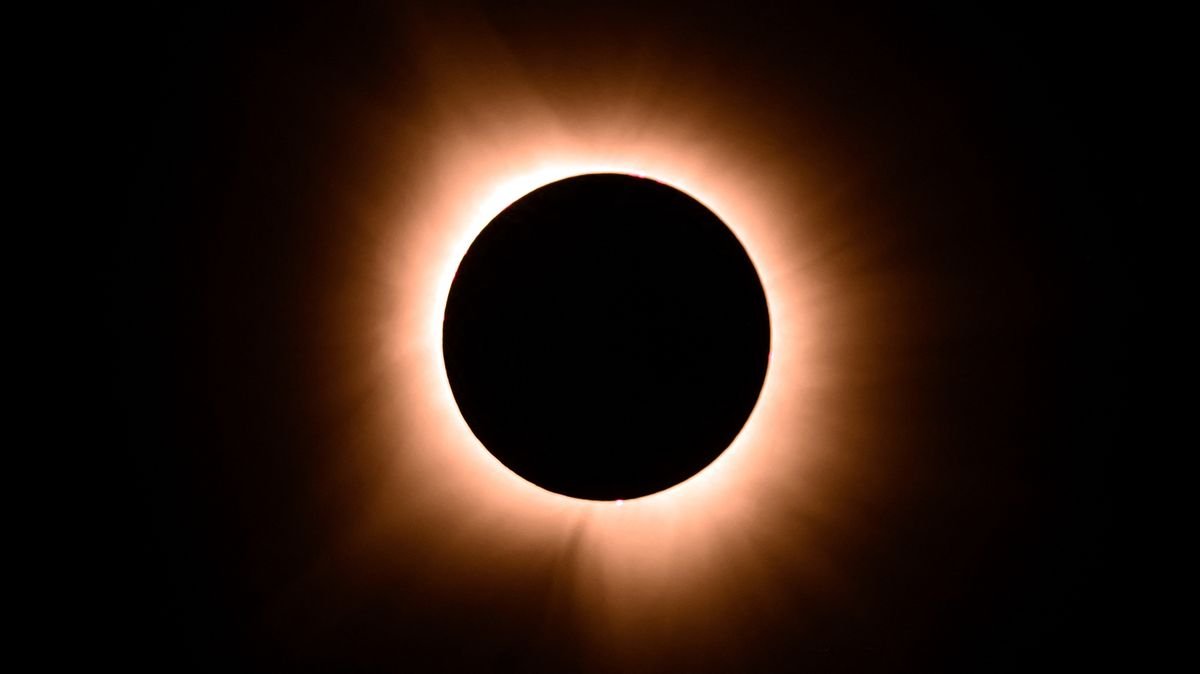
A rare solar eclipse is set to grace the skies above the United Kingdom and a significant part of Europe in the upcoming month. On Wednesday, August 12, millions of observers across the UK will witness up to 90% of the sun being obscured during this exceptional celestial occurrence, marking the first total solar eclipse visible from Europe since 1999. The moon’s path will intersect directly between the Earth and the sun, casting areas of Greenland, Iceland, northern Russia, Spain, and a small section of Portugal into temporary darkness.
Although the UK will not experience a total eclipse, a large portion of the country will still witness a substantial blockage of sunlight. The phenomenon of a solar eclipse unfolds when the moon traverses across the sun, obstructing its light to varying degrees.
This forthcoming event will be the first total solar eclipse visible from Europe since 1999 when individuals in parts of Cornwall and Devon had the opportunity to witness totality. This time around, observers in the UK and Ireland will observe a partial eclipse, with the moon seeming to take a sizable “bite” out of the sun.
The eclipse will commence with the “first contact” as the moon initiates its journey across the sun. It will then reach its peak coverage before gradually receding as the moon moves away. While the UK will not experience complete darkness as in other countries due to the sun not being entirely obscured, there will be a noticeable decrease in brightness and temperature as a significant amount of sunlight is anticipated to be blocked, as per the Royal Observatory Greenwich.
Depending on the clarity of the skies, daylight may briefly resemble dusk or dawn. This effect will be most pronounced in the south-western region, where a greater portion of the sun will be obscured. London is expected to witness approximately 90% coverage, with Cornwall potentially seeing up to 95%. The south-western tip of Ireland could experience nearly 97.7% coverage. Additionally, a partial eclipse will be observable from various parts of Europe, Canada, and north-western Africa.
The eclipse will commence in the UK during the early evening of Wednesday, August 12. Observers will witness the moon gradually covering the sun before reaching maximum coverage and then receding. Specific timings will vary depending on the viewing location.
For those seeking to experience complete darkness, traveling overseas will be necessary as the path of totality will commence over Greenland, traverse Iceland, and conclude in northern Spain and the Balearic Islands. A remote area in northern Russia will also witness a total eclipse.
According to NASA, totality will occur around midday in northern Russia, during the late afternoon or early evening in Greenland and Iceland, and shortly before sunset in Spain and the north-western tip of Portugal. Along the eclipse path, most individuals will encounter totality lasting for less than two minutes, with those closest to the path’s center in Greenland, Russia, or the North Atlantic potentially witnessing it for approximately two-and-a-half minutes.
It is imperative not to look directly at the sun without adequate eye protection. Viewing the sun during a partial eclipse can result in severe and permanent eye damage. The only safe moment to view without protection is during totality, which will not happen within the UK.
Viewers should utilize certified eclipse glasses, significantly darker than standard sunglasses, as recommended by NASA. Caution is advised when purchasing glasses online to avoid counterfeit products that may not provide sufficient protection. The American Astronomical Society suggests first checking glasses indoors, ensuring that only extremely bright lights are faintly visible. Testing them outside should reveal almost nothing visible, with a brief glance towards the sun showing a clear, round disc that is comfortably bright rather than dazzling.
Photographers capturing the eclipse should also employ certified solar filters on their cameras or telephoto lenses.
For those in the UK who miss the upcoming event, a considerable wait lies ahead until the next total solar eclipse graces British skies, expected in 2090. Spain will witness another total eclipse much sooner, on August 2, 2027, with subsequent total eclipses crossing parts of southern Africa, Australia, North America, Asia, and Greenland over the following two decades.

