

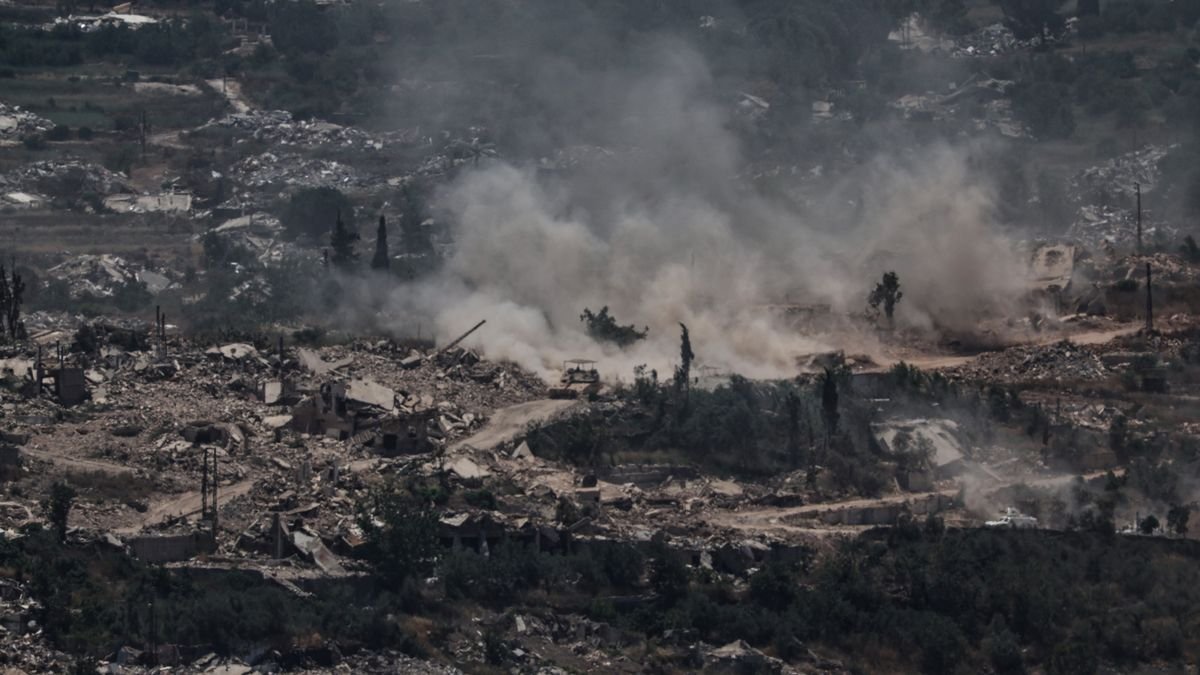
The conflict in Lebanon persists despite a ceasefire between the US and Iran, with Hezbollah’s leader demanding the withdrawal of Israeli troops from the country. Israeli airstrikes targeting Hezbollah operatives resulted in seven deaths, while four Israeli soldiers, including two officers, were injured in militant attacks. This violence violates US President Donald Trump’s 60-day peaceful negotiation agreement.
The clashes occurred as the Israeli Defence Force launched an operation at the Ali Taher ridge, where a group of 30 Hezbollah fighters is entrenched in a vast tunnel network. Hezbollah’s leader, Naim Qassem, declared Iran’s victory over America and Israel through the signed memorandum of understanding. He demanded Israel’s complete withdrawal from Lebanese territory to halt aggression.
The ongoing tensions have strained Trump’s Iran peace deal, which faced challenges from the outset. Israel insists on maintaining a significant troop presence in Lebanon to defend against Hezbollah threats and protect border communities. The United Nations halted the evacuation of 11,000 sailors in the Strait of Hormuz following an Iranian attack on a cargo ship.
Iran’s Islamic Revolutionary Guard Corps (IRGC) warned against unauthorized vessel movements in the Strait of Hormuz, leading to a confrontation with a Singapore-flagged ship. Despite these incidents, several ships, including South Korean vessels, have navigated the strait due to the US-Iran ceasefire. The IRGC emphasized that only designated routes are permissible, and violators will face consequences.
Recent days have seen 40 to 60 ships passing through the vital Strait of Hormuz, a significant decrease from pre-war levels. The Iranian authorities underscored the importance of adhering to authorized routes to ensure maritime safety and security.

