
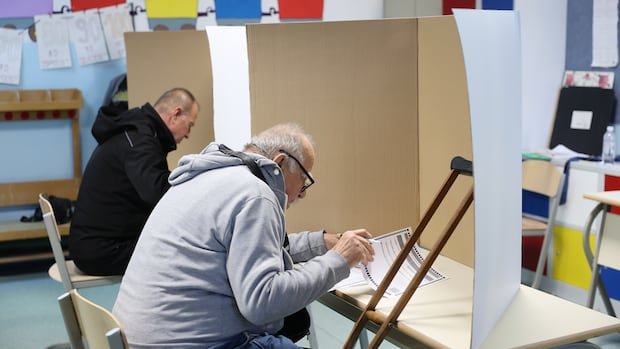
Bosnian Serb nationalist leader Milorad Dodik has claimed victory for his party in Bosnia’s recent election, which was heavily influenced by economic challenges, the potential EU accession of the Balkan nation, and the enduring ethnic tensions stemming from the devastating 1992-95 war. Dodik, a strong proponent of Russia, who was not a candidate, played a significant role in the election campaign, stoking separatist sentiments that raised concerns about renewed instability in Bosnia.
Previously the president of Republika Srpska, the country’s Serb-majority region, Dodik was barred from holding public office due to a conviction last year for defying decisions by the international envoy overseeing the post-war peace agreement. With nearly 90% of the votes tallied, Dodik’s ally Zeljka Cvijanovic, representing the right-wing Alliance of Independent Social Democrats, secured over 55% of the votes for one of the three seats in the country’s tripartite presidency, leading her closest rival by a significant margin.
In a late-night press briefing following the election, Dodik expressed confidence that his nationalist party would also dominate Republika Srpska’s assembly, attributing the victory to U.S. President Donald Trump’s “remarkable success” in 2024 and the support from Russian President Vladimir Putin. A total of 3.4 million voters were eligible to elect the three members of the multi-ethnic presidency, national parliament legislators, and entity heads for the Muslim-majority Federation of Bosnia and Herzegovina, as well as Republika Srpska.
In a separate race, Darijana Filipovic of the nationalist Croatian Democratic Union of Bosnia and Herzegovina held a commanding lead for the Croat presidency seat, while the incumbent Bosniak member Denis Becirovic of the Social Democratic Party led his closest competitor by a narrow margin. Both Filipovic and Becirovic claimed victory in their respective races before all votes were officially counted.
The Central Election Commission disclosed that 1,432,269 votes were cast, representing a 42% turnout, a decrease of around eight percent compared to the previous election in 2022. The complex governance structure in Bosnia, established by a U.S.-brokered agreement in 1995 to navigate the ethnic divisions among Muslim Bosniaks, Orthodox Serbs, and Catholic Croats, has been repeatedly challenged by Dodik, who openly opposes the national government in Sarajevo and advocates for Republika Srpska’s independence.
Despite Bosnia’s aspirations to join the EU, political and ethnic rifts, where citizens vote along ethnic lines, have impeded progress. Analyst Dragan Bursac noted that Dodik’s influence persists, despite not being a candidate for the first time in nearly three decades, highlighting the limitations of attempts to restrict his political involvement.
The article also touches on Bosnia’s enduring ethnic tensions, exacerbated by recent events paying tribute to war-time figures like Ratko Mladic, a controversial figure among Bosnian Serbs. The election introduced electronic voter identification and ballot scanning to enhance election security, although technical challenges delayed voting in some polling stations. Amid concerns about potential confusion among older voters, Bosnia’s Interior Ministry reported disruptions at a fraction of polling stations in Republika Srpska.

