
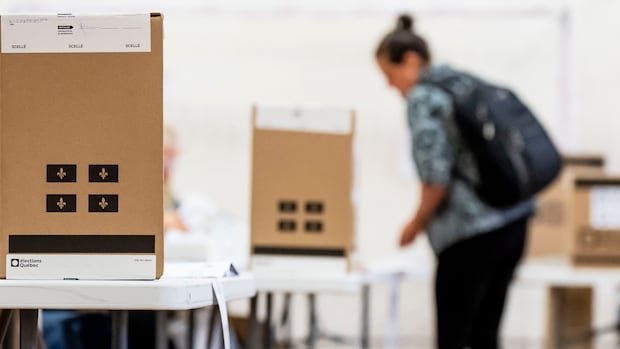
For weeks, Quebec politicians have been touring the province, pledging to address healthcare issues, enhance the education system, and reduce the cost of living. However, as voters prepare to cast their ballots on Monday, an analysis of over three decades of data provides a reality check: provincial governments are more likely to backtrack or fail to fulfill a campaign promise than to uphold it.
Research conducted by Université Laval’s Polimeter project reveals that since 1994, Quebec governments have successfully implemented only 49 percent of their election commitments. The ability of a government to deliver on its promises depends on factors such as the economic climate, the duration of its mandate, and the nature of the pledges made.
Lisa Birch, co-founder of Polimeter and a researcher at the Centre for the Analysis of Public Policy, emphasized that promises well within the government’s authority are easier to keep. She cited the example of the previous Coalition Avenir Québec administration’s commitment to bolster the province’s secularism laws, which simply required passing legislation in the National Assembly and defending the laws in court.
On the other hand, promises that involve achieving a specific target, such as addressing a chronic labor shortage or negotiating with the federal government, pose greater challenges. Alexandre Fortier-Chouinard, a post-doctoral researcher at Université Laval working on the Polimeter project, highlighted the difficulties in fulfilling promises that entail both an action and a subsequent outcome.
One notable example was former Premier François Legault’s 2018 pledge to ensure every Quebec resident has a family doctor. Despite legislative efforts to increase patient quotas for physicians, the shortage of healthcare workers made the target unattainable. Consequently, the Coalition Avenir Québec ultimately abandoned the promise during the 2022 campaign.
Looking ahead to the 2026 election, the next government will encounter significant obstacles, including labor shortages in critical sectors like construction, a persistent deficit, and economic uncertainties stemming from trade tensions with the United States. Various parties, such as Parti Québécois and the Conservatives led by Éric Duhaime, have vowed to streamline government bureaucracy while enhancing services, particularly in healthcare and education.
However, Birch cautioned that reconciling promises to reduce the public sector to meet deficit targets while maintaining essential services could present a paradox for these parties. For instance, Liberal Leader Charles Milliard’s proposal to construct 100,000 new housing units annually faces challenges due to limited construction workforce capacity.
As demonstrated by the Polimeter data, the effectiveness of a government in fulfilling its commitments can be influenced by economic conditions. During periods of economic uncertainty, balancing budgets and delivering on promises becomes more arduous. Birch stressed the importance of considering a government’s implicit mandate, which encompasses managing unforeseen challenges in addition to fulfilling campaign pledges.

