

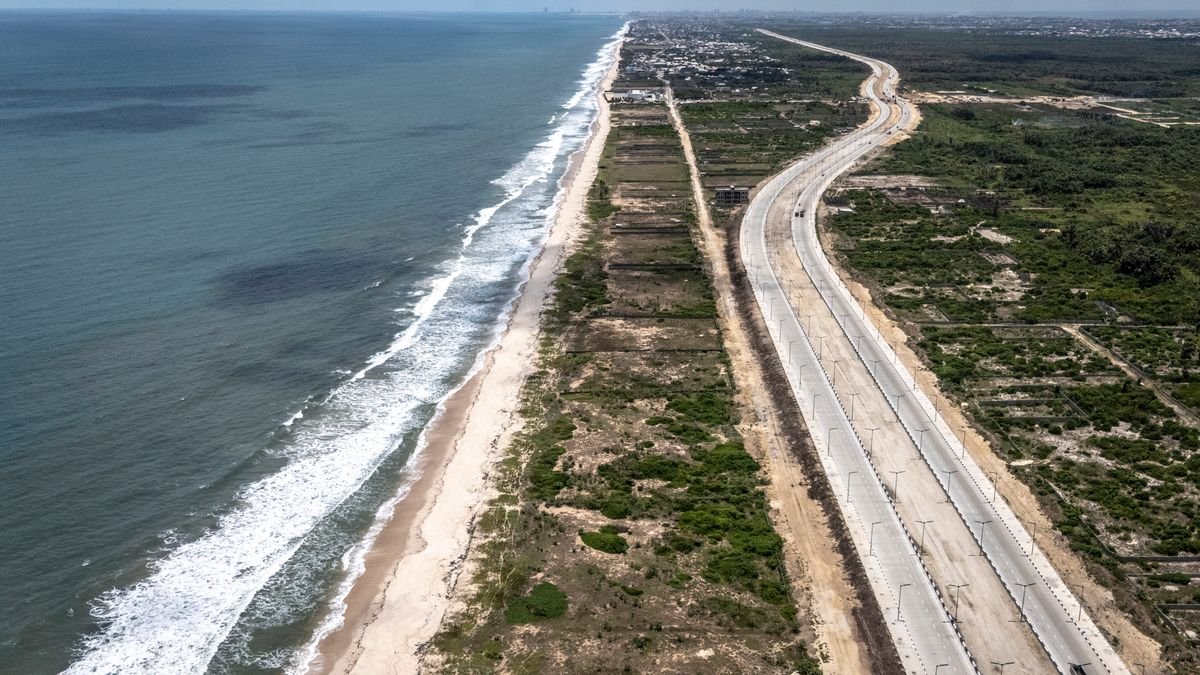
A significant project to construct a vast coastal highway along the Atlantic coast is currently underway, despite notable concerns. This 430-mile roadway will connect Nigeria’s bustling capital city of Lagos with Calabar city, situated near the border with Cameroon, with an estimated cost of around £8.5 billion.
The initiative for this mega-highway stems from Nigerian President Bola Tinubu, who aims to transform the country’s transportation infrastructure and enhance tourism. During a recent event marking the opening of the initial segment of the highway, President Tinubu expressed confidence in the project, stating, “We have a road that will outlast all of us present here.”
However, environmentalists have raised alarm about the highway’s vulnerability to anticipated sea level increases in the next decade. Nnimmo Bassey, an environmental advocate and former chairman of Friends of the Earth International, criticized the Lagos-Calabar Coastal Highway as a symbol of climate denial due to the rising sea levels along the Nigerian coastline.
Despite these concerns, President Tinubu remains resolute in advancing the construction as a key element of his re-election campaign. The long-awaited highway, which has been in the planning stages for nearly half a century, is viewed by Tinubu and his supporters as a crucial move for Nigeria’s economic progress.
The government is expected to fund 30% of the $12 billion budget for the project, while the remaining costs will be covered by the contractor, Hitech Construction Company Ltd. Hitech will operate toll collection on the highway for 15 years to recoup its investment.
Additionally, Hitech, the same company behind the Eko Atlantic project, a privately funded mega-city near Lagos, plans to safeguard the new highway with protective measures such as sea walls, mangrove belts, and dunes to mitigate erosion and carbon absorption.
However, concerns persist about the potential environmental impact of the highway, particularly in the Akwa Ibom state, where it will intersect the protected Stubbs Creek Forest, home to endangered species. Nigeria has already lost a substantial portion of its forest cover, with nearly 90% depleted over the last three decades.
Studies indicate that coastal erosion is a pressing issue, with significant shoreline retreat in Lagos State over the years. While an environmental impact assessment suggests that current sea level rise projections may not impact the highway, forecasts predict more drastic consequences due to global temperature increases.
Despite these challenges, the Lagos-Calabar Coastal Highway remains a pivotal project in Nigeria’s development trajectory, with proponents emphasizing its potential to boost economic growth and transportation networks in the region.

