

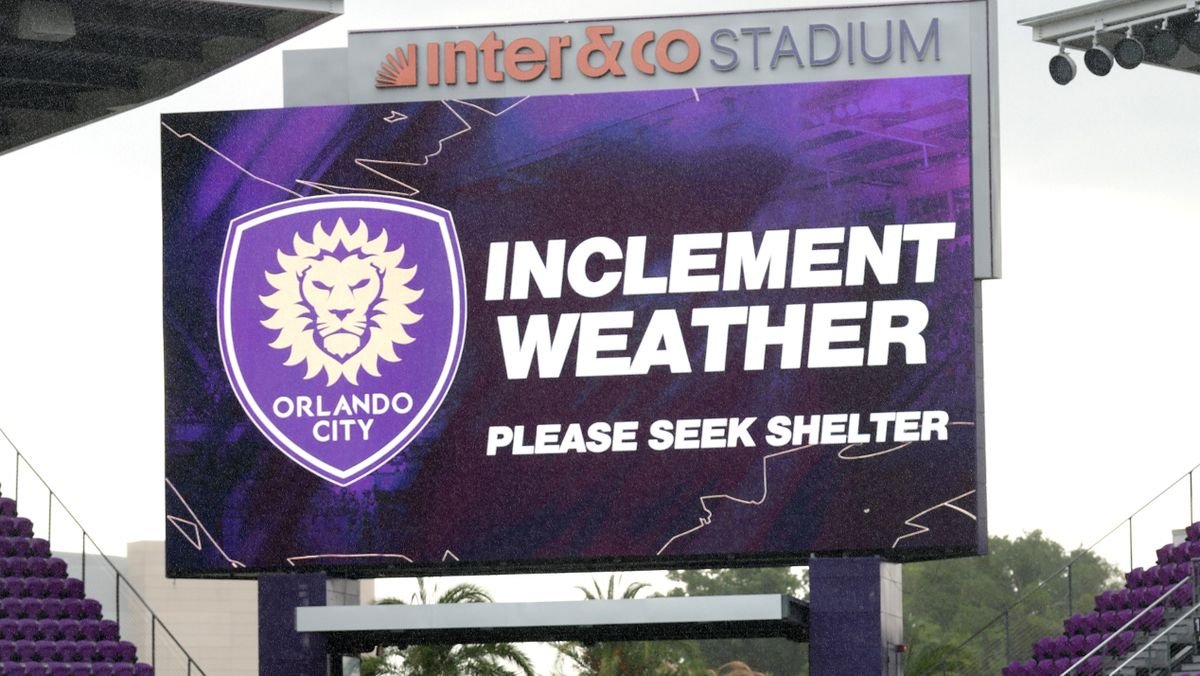
The England team is facing potential disruption to their World Cup preparations as their training base area in Kansas City has been placed under a ‘Tornado alert’. A thunderstorm is forecasted for the day when the team is scheduled to arrive in Kansas from Florida, where they encountered adverse weather conditions before their recent victory over Costa Rica.
The team is set to have their first training session at the Swope Park training facility upon arrival. Following a delayed kickoff in Orlando due to storms, Kansas City is on high alert with preparations such as ‘Tornado evacuation rooms’ in place for safety measures.
The extreme weather conditions have been exacerbated by global warming and the ‘El Nino effect. Despite the challenges, the squad is expected to land in Kansas City for training sessions ahead of their opening match against Croatia in Dallas.
Summer thunderstorms are a common occurrence in cities like Miami, Houston, and Atlanta, triggered by warm, humid conditions. When lightning is detected near a stadium, standard practice dictates suspending play for safety reasons.
With heavy rainfall recently experienced in Kansas City, the National Weather Service has issued warnings and safety recommendations for residents. The team will also have to contend with high humidity levels and ‘corn sweat’, a phenomenon caused by corn plants releasing water vapor into the air during hot summer days.
Coach Tuchel selected Kansas City as the training location to minimize travel time and prepare for potentially challenging conditions in Mexico City. Residents describe the humidity in Kansas City as turning normal summer days into intense experiences, affecting the body’s ability to cool down.
The weather is expected to play a significant role in the tournament, with high temperatures, thunderstorms, and air quality concerns from wildfires in the region. As the tournament progresses, temperatures in the southern United States and Mexico could rise to uncomfortable levels, affecting player performance.
Experts note that the perceived temperature in cities like Miami and New York could be significantly higher during heatwaves, making it crucial for teams to adapt and prepare for varying weather conditions throughout the tournament.

