

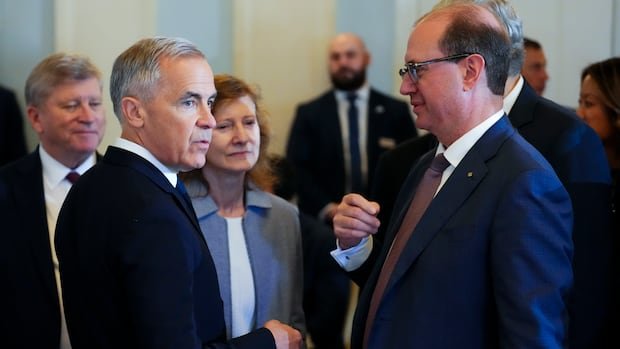
Canada’s envoy to the United States emphasized in a virtual meeting on Thursday that the return of American alcohol to Canadian markets is a crucial condition for finalizing a trade deal and averting potential new tariffs, as reported by CBC News. Ambassador Mark Wiseman conveyed this message during a comprehensive briefing on the trade deal to approximately 100 members of the Canada-U.S. trade council.
The council, comprising various businesses, industry associations, and labor unions, also received insights from a former Canadian chief trade negotiator who expressed reservations about the agreement. Amid ongoing negotiations in Washington to prevent steep tariffs on Canadian exports, the Canadian delegation faces a looming deadline of midnight Friday.
During the meeting, Wiseman outlined a tentative agreement to sidestep the proposed tariffs, according to three sources familiar with the discussion. The sources, who requested anonymity as they were not authorized to disclose details publicly, revealed that Wiseman mentioned around 35 Canadian officials working diligently at the Canadian Embassy in Washington to finalize the deal’s language within 24 to 48 hours.
The potential trade pact involves reducing tariffs on steel, aluminum, and automobiles, as well as modifying the allocation of dairy import licenses by the Canadian government, which could lead to increased American dairy products in Canadian stores. Following Wiseman’s departure from the call, former chief trade negotiator Steve Verheul cautioned the council about potential risks associated with the deal, highlighting concerns about accepting sectoral tariffs and making concessions.
Verheul, who played a pivotal role in past trade negotiations leading to the Canada-U.S.-Mexico Agreement, warned that while the immediate threat posed by Trump’s Section 338 tariffs is pressing, Canada risks surrendering long-term advantages by agreeing to unfavorable terms. He underscored the potential consequences of yielding leverage before the CUSMA review and emphasized the need for Canada to resist yielding to sectoral tariffs.
Additionally, sources revealed that the proposed agreement includes lowering steel and aluminum tariffs from 50 to 25 percent and reducing tariffs on Canadian-manufactured vehicles from 25 to 15 percent, with exceptions for American content. Despite expectations within the Canadian auto industry for an exemption from American tariffs on Canadian-made components, Wiseman informed the council that the matter would be deferred to future CUSMA negotiations.
Verheul’s message to the council underscored the importance of Canada asserting its stance against sectoral tariffs and striving for duty-free trade at the upcoming CUSMA review. He raised concerns about the lack of industry consultation by the Canadian government and the disparity in information sharing compared to the U.S. industry, prompting frustration among council members.
Former deputy prime minister Chrystia Freeland, another council advisor, participated in the call and echoed concerns about the potential challenges of removing agreed-upon tariffs in the future. Freeland, who led Canada’s negotiations on NAFTA’s transformation into CUSMA, emphasized the significance of carefully navigating tariff agreements due to their lasting implications.

