

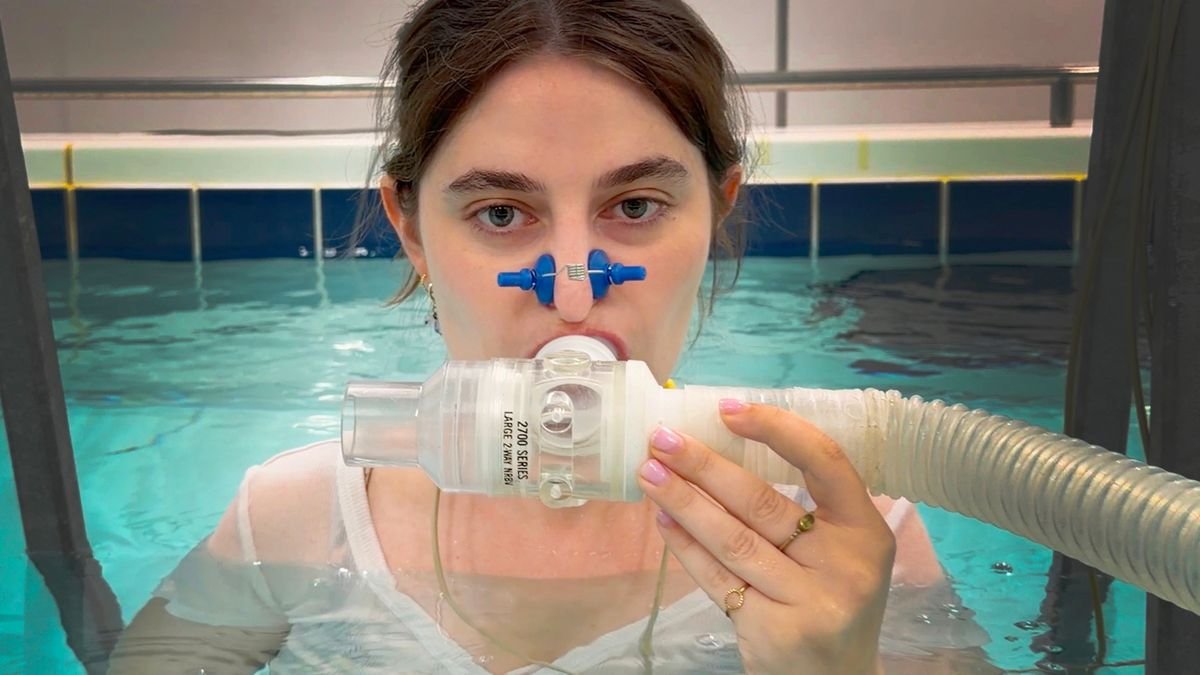
As temperatures rise, many individuals are flocking to beaches, lakes, and rivers to seek relief from the heat. However, while the air may be hot, the water remains cold and poses a significant drowning risk. Exploring the dangers of cold water shock, we ventured into the Extreme Environments Lab at the University of Portsmouth.
In an experiment, I was equipped with a heart monitor and breathing tube and immersed in a specialized plunge pool set at 15°C, reflecting the average sea temperature in the UK. The ambient temperature was maintained at 28°C to simulate the current heatwave conditions.
Upon entering the cold water, my gasp rate, indicating the volume of oxygen intake, surged from a normal 0.3 liters to 1.5 liters, a level that could lead to drowning if submerged. Additionally, my heart rate spiked from a resting 80 beats per minute to 110, prompting blood vessels to constrict and potentially causing heart issues, even in young individuals. Cold water shock, responsible for inducing gasping or heart failure, contributes to approximately 60% of drowning incidents.
Furthermore, exposure to cold water affected my dexterity, as demonstrated by the delay in typing a simple message after spending time in the water. Infrared cameras captured the change in my body heat, transitioning from warm (yellow) before immersion to significantly cooler (blue) afterward.
Navigating the pool’s flume, designed to create a strong current, proved challenging even for experienced swimmers. Despite proficiency, just three minutes of battling the cold water left me fatigued and breathless.
Professor Mike Tipton, a renowned expert in extreme environments at the University of Portsmouth, highlighted the rapid skin temperature drop upon entering cold water, triggering the cold shock response. He emphasized the importance of swimming parallel to the shore, staying within safe depths, and understanding the distinct challenges of open water compared to indoor pools.
As the UK experiences its third heatwave in two months, with temperatures reaching 34°C in some regions, health alerts have been issued, signaling potential strains on healthcare services. The RNLI advises individuals in distress to practice the ‘Float to Live’ technique, emphasizing relaxation, buoyancy, and controlled breathing.
In case of witnessing someone in trouble from the shore, the National Water Safety Forum recommends the ‘Phone, Float Throw’ approach, involving contacting emergency services, advising the person to float, and providing a buoyant object for support.
Amid rising drowning incidents, initiatives like the Save Lives For Sam campaign advocate for improved water safety measures, including mandatory lessons in schools, public awareness campaigns, enhanced lifesaving equipment, legislative actions, and a dedicated Minister for Water Safety. Join the movement to safeguard our waters and prevent tragic losses.

