

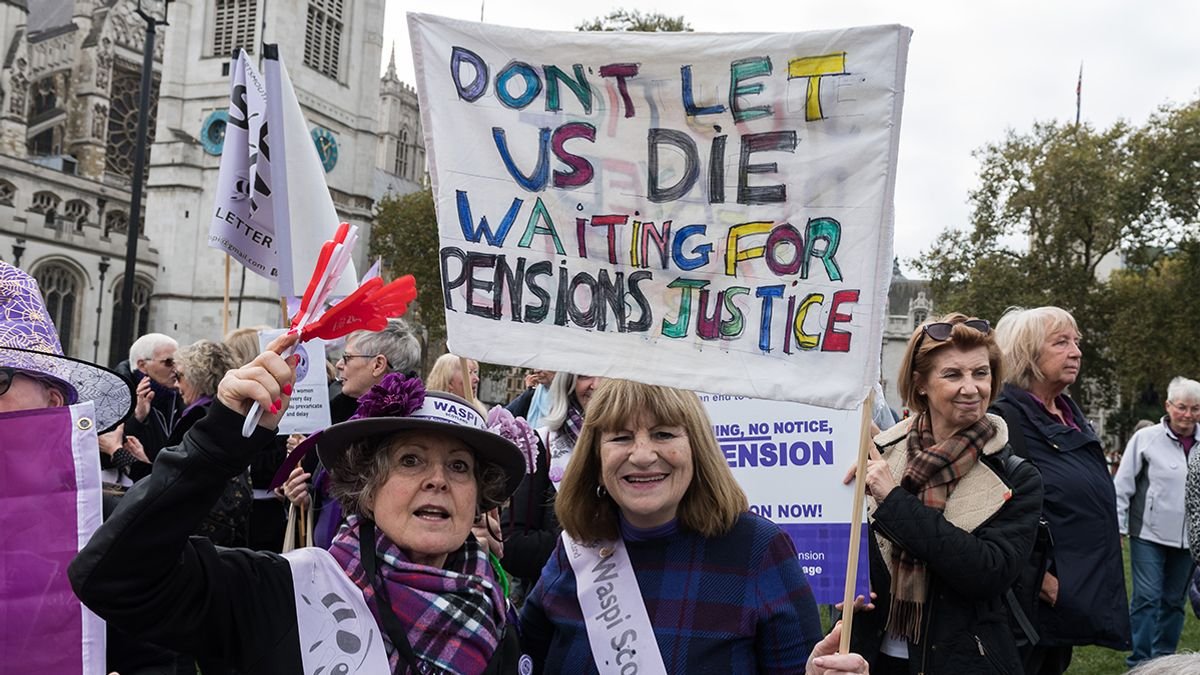
Andy Burnham has agreed to meet with WASPI campaigners to address the issues faced by 1950s-born women affected by changes in the state pension age. The incoming Prime Minister, who is set to assume office soon, previously expressed his commitment to supporting these women who were let down by the Department for Work and Pensions when the pension age was raised. Labour, under Keir Starmer, did not implement a compensation plan despite recommendations made by an independent ombudsman in 2024.
Angela Madden, chair of the Women Against State Pension Inequality (WASPI) group, disclosed that constructive discussions have occurred with Andy Burnham’s team, with further talks expected once he assumes office. Madden stated that WASPI had a meeting with Burnham during the Makerfield by-election, where he reaffirmed his longstanding backing for the cause, acknowledging the injustices faced by many women born in the 1950s.
WASPI has agreed to explore potential solutions for affected women, emphasizing the need for serious engagement following the parliamentary ombudsman’s extensive investigation that spanned six years. The group remains open to discussing fair compensation avenues with politicians from all parties to address the prolonged injustice faced by these women.
Campaigners anticipate that the new Prime Minister will uphold his commitment to addressing the concerns raised by WASPI. During the Makerfield by-election, Burnham expressed discomfort with how politicians had treated millions of affected women. While he clarified that he was not planning to allocate billions for compensation, he emphasized his enduring support for the cause and the need to rectify the unfair treatment of WASPI women.
Burnham’s team indicated a willingness to consider alternative solutions, such as providing concessionary travel benefits similar to those he implemented as Mayor of Greater Manchester. Despite the decision against financial compensation, there is openness to exploring alternative schemes based on the successful model in Greater Manchester.
The failure to adequately inform women affected by the pension age changes led to unforeseen challenges and financial hardships for many. The WASPI campaign has initiated legal action seeking redress for the government’s refusal to provide compensation, with hopes that a new Labour government will reevaluate their demands.
The State Pension age for women increased gradually from 60 to 65 between April 2010 and November 2018, further rising to 66 in October 2020 and is projected to reach 67 by 2028.

