

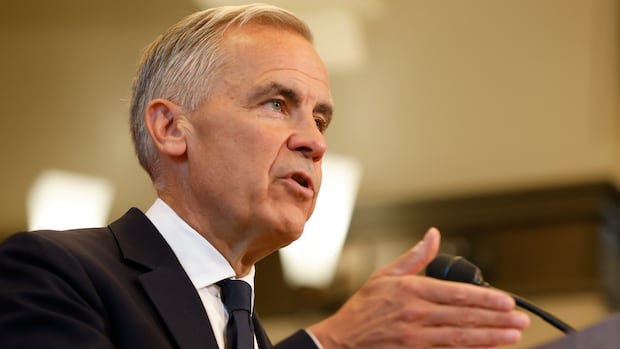
In an announcement, Prime Minister Mark Carney revealed why he walked away from negotiations with the Trump administration, citing that Washington’s proposed terms would have had a detrimental impact on key Canadian industries like automotive, steel, and aluminum sectors. Despite making progress initially, Carney stated that the momentum shifted, leading to an impasse as the U.S. demands were unacceptable to Canada.
Contrary to Carney’s statement, U.S. Vice-President JD Vance alleged that Canada introduced unreasonable last-minute requests and accused them of exploiting America. Ontario Premier Doug Ford, privy to the discussions, labeled the proposed deal as unfavorable and commended Carney for not finalizing it.
Flavio Volpe, a member of Canada’s advisory committee, mentioned that while negotiators had agreed in principle to a potential agreement, discrepancies arose during the drafting process, deviating from the discussed terms.
One major sticking point was the exclusion of medium- and heavy-duty trucks from tariff relief just before the deadline by American negotiators, affecting lucrative vehicles like Ford’s F-Series pickups and General Motors’ Silverado produced in Ontario. Carney highlighted this change as significant in the negotiations.
Additionally, the U.S. attempted to limit Canada’s trade autonomy by imposing constraints on potential agreements with other nations. This move conflicted with Canada’s strategy to diversify its trade partnerships beyond the U.S.
Furthermore, discussions touched on sectoral tariffs, particularly on steel and aluminum, with the U.S. planning to reduce tariffs on Canadian steel and aluminum while maintaining countervailing and anti-dumping duties on derivative products. Carney emphasized that Canada was only willing to align on sectoral tariffs if they were mutually beneficial.
The negotiations also addressed cultural issues, with disagreements over bilingual product labeling and French-language content on streaming platforms. Carney noted these points as sources of contention that influenced his decision to reject the proposed agreement.
While Carney was prepared to make certain concessions if the U.S. significantly lowered tariffs affecting Canadian industries, the overall outcome did not align with Canada’s best interests. This stance received support from various provincial leaders and industry figures wary of accepting unfavorable terms.
In response to the aftermath of the failed negotiations, Canadian sentiment, as reflected in polling data, overwhelmingly supports Carney’s decision to walk away from the deal. Moving forward, Canada remains cautious about re-engaging in talks unless a more favorable offer is presented by the U.S. regarding key trade sectors like steel, aluminum, autos, and forest products.

