

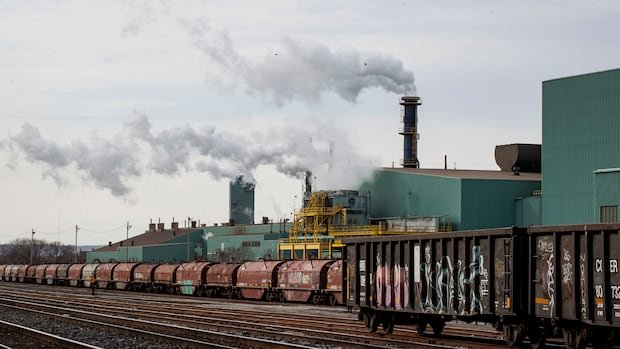
Amid U.S. President Donald Trump’s threat of imposing new 50% tariffs on various Canadian products, the president of a Hamilton steelworkers union expressed concerns about the impact on the industry. Ron Wells, the president of United Steelworkers (USW) Local 1005, stated that existing tariffs have already negatively affected Canadian steel sales to the U.S., potentially leading to increased living costs and affecting businesses that rely on steel producers.
Although 50% tariffs on steel have been in effect since last year, it remains unclear what Trump specifically meant by announcing an increase in tariffs to 50% starting January 1 for steel, automobiles, and auto parts. Hamilton, known for housing two major primary steel producers in Canada, ArcelorMittal Dofasco and Stelco, as well as numerous fabricators, has felt the impact of these tariffs.
Wells mentioned that business has slowed down significantly since the imposition of tariffs. Additionally, recent tariffs on approximately $28 billion worth of Canadian goods by the U.S. have further exacerbated the situation, prompting Prime Minister Carney to announce retaliatory tariffs on the U.S. starting September 8.
Chamber CEO Highlights Business Challenges
Hamilton Mayor Andrea Horwath emphasized the stress faced by the city as a steel and manufacturing hub with a substantial agricultural sector. She urged federal and provincial support to ensure the resilience of Hamilton businesses during these uncertain times. Greg Dunnett, CEO of the Hamilton Chamber of Commerce, echoed these sentiments by stating that the city is among the most affected communities and requires assistance and investments to navigate the challenges.
Despite attempts to reach out to Cleveland-Cliffs, the company that acquired Stelco in July 2024, for insights into the impacts of the current and potential tariffs on its Canadian operations, no response was received. In a recent earnings call, Cleveland-Cliffs CEO Lourenco Goncalves expressed concerns about the future competitiveness of the company’s galvanizing lines in Hamilton without additional measures to uphold fair trade practices in Canada.
Amid these uncertainties, Premier Doug Ford and Carney have strongly criticized Trump’s trade policies and emphasized the need for collective action to protect Canadian industries. Ford pledged increased support for workers affected by tariffs through various initiatives, including expanding the Protect Ontario Financing Program to offer loans to impacted businesses. He also called for restrictions on foreign steel imports and advocated for increased procurement of Ontario-made goods.
Furthermore, NDP Leader Marit Stiles urged Ford to reconvene the Legislature to pass emergency tariff relief measures, emphasizing the need for swift action to support workers affected by the trade war. The steel industry, like other sectors, has been grappling with the evolving U.S. trade policies for over a year, with industry leaders expressing concerns about the future of Canadian steel production.
As the trade tensions persist, Canadian officials and industry stakeholders are working toward safeguarding the interests of steel producers and workers. Despite the challenges posed by escalating tariffs, the focus remains on protecting jobs and supporting affected communities across Canada.

