

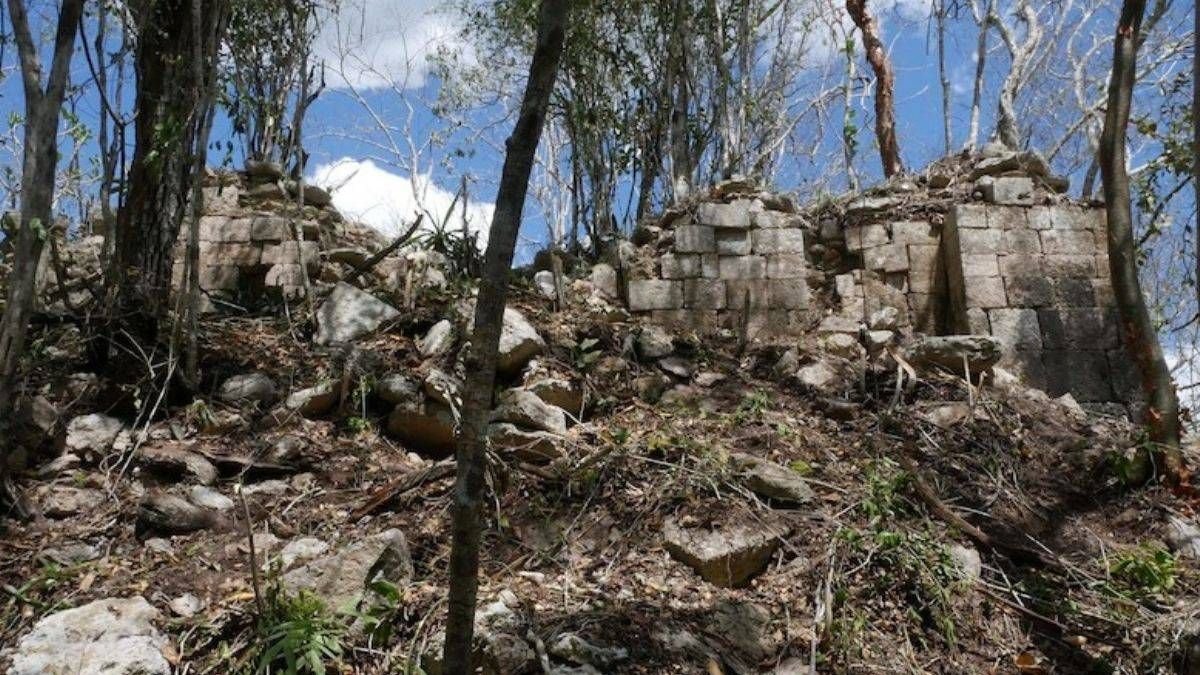
A group of researchers has discovered an ancient Mayan city hidden in the Mexican jungle for over a millennium. This city, named Minanbe, was found by a team of Slovenian and Mexican explorers during an expedition in the Calakmul Nature Reserve. The city, spanning 13 hectares, is believed to have been constructed between 600 and 900 AD.
Led by archaeologist Ivan Sprajc from the Research Centre of the Slovenian Academy of Arts and Sciences, the team made this significant find following an analysis of LiDAR images. The city features various structures, including a 13-meter-tall pyramid in the Rio Bec style and a relief depicting water elements and a beheading.
The expedition, part of a project exploring the Central Maya Lowlands, was supported by the Archaeology Council of the National Institute of Anthropology and History. The team faced challenging terrains, relying on machetes and quad bikes to navigate through dense vegetation.
Mr. Sprajc expressed the excitement of discovering an intact site with no signs of looting, naming it Minanbe to reflect its pristine condition. The city’s layout aligns with agricultural power structures typical of the region, although questions remain about potential external influences on its social dynamics.
The researchers’ dedication and perseverance in uncovering this hidden Mayan city showcase the ongoing importance of archaeological exploration in understanding ancient civilizations.

