
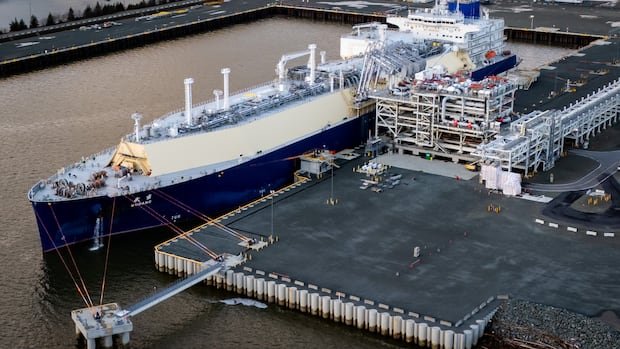
LNG Canada is set to utilize Chinese steel once again for its Phase 2 expansion project in Kitimat, B.C., citing the need for specialized fabrication capabilities. The project, valued at $33 billion, will see an increase in production capacity with the addition of two new trains, bringing the total to four and boosting production from 14 to 28 megatonnes annually upon completion in the early 2030s.
The joint venture has opted to procure more components from China Offshore Oil Engineering Co., Ltd. (COOEC), which previously manufactured the initial two liquified natural gas processing units for LNG Canada. Prime Minister Mark Carney highlighted these major projects as integral to Canada’s “Buy Canadian policy” during the announcement of the project’s referral to the federal Major Projects Office in September 2025.
In response to inquiries about the choice of steel for the expansion, Carney deferred to the project proponents, emphasizing their discretion in the matter. LNG Canada clarified that the decision to source steel from China stemmed from the specialized fabrication requirements for the large-scale modules, citing the scarcity of fabrication yards in Canada capable of meeting the project’s demands.
Shell Canada Energy leads the project with a 40% stake, while state-owned PetroChina holds a 15% share. Other partners include Malaysia’s Petronas (25%), Japan’s Mitsubishi Corporation (15%), and Korea Gas Corporation (5%). The exported LNG is distributed to Asian markets based on the partners’ ownership stakes.
Despite concerns over the use of Chinese steel, LNG Canada and other similar projects received exemptions from anti-dumping duties to facilitate their operations. The federal government’s concession to LNG Canada for Phase 1 was estimated at $1 billion, enabling the project to move forward.
While Chinese steel has faced scrutiny in the past, current importation of steel components from China for LNG Canada does not incur tariffs. The utilization of Canadian steel is prioritized in other aspects of the project, such as compressor stations along the pipeline, aiming to source approximately 70% of the required steel from Canadian suppliers.
Prime Minister Carney’s commitment to bolster Canadian industries through projects like LNG Canada’s expansion underscores the government’s push for domestic procurement in strategic sectors, emphasizing the importance of self-reliance and security in critical infrastructure projects.

