

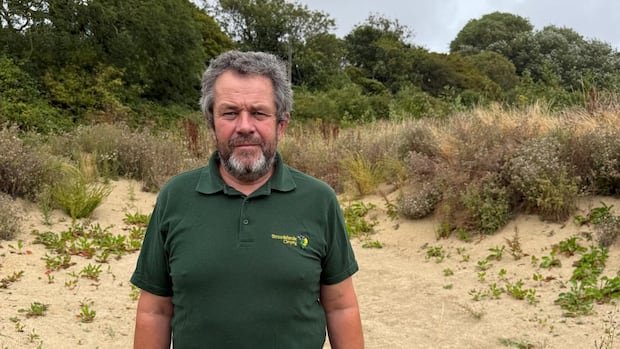
In a field on his farm in southern England, James Baird gestured toward the ground, where deep cracks had formed. Baird, a crop farmer in West Sussex known for his nature-friendly practices, expressed astonishment at the extent of the fissures, noting that some were so deep that one could lose an arm in them. With over four decades of farming experience, Baird remarked that this summer’s conditions were unprecedented in his farming career. The cereal harvest at his farm, Stroodelande, concluded much earlier than usual, resulting in a 25 percent decrease in crop yields.
Despite the common perception of the U.K. as a rainy nation, recent years have brought successive droughts, challenging this stereotype. Baird emphasized the emerging patterns of extreme dry spells, highlighting this summer as the driest he has encountered. By early August, the typically lush English countryside with its emerald fields had transformed into parched landscapes due to recurring heatwaves and a prolonged absence of rainfall.
Official reports indicate that half of England and all of Wales are currently experiencing drought conditions, characterized as exceptionally serious by the U.K.’s Environment Agency. The scant rainfall in July, with England receiving only seven percent of its average for the month and southern England receiving a mere one percent, has exacerbated the situation. The shift from the country’s traditional damp climate to a parched environment has raised concerns about long-term water security and potential food shortages.
The ongoing drought has not only disrupted traditional English ways of life but also raised alarms about the nation’s water sustainability in the future. Estimates suggest that by 2050, England could face a shortfall of five billion liters of water per day. This scenario has also prompted worries within the agricultural community, with the National Farmers’ Union cautioning about possible food shortages on the horizon.
The prolonged dry spell has led to scorched crops, diminished water levels in rivers and canals, and increased wildfire risks. Around 20 million people in England and Wales, roughly a quarter of the population, are subject to hosepipe bans to conserve water resources, with strict penalties for violators.
The challenges posed by the drought extend beyond agriculture, impacting various sectors such as water management and energy. The need for innovative solutions and sustainable practices has become imperative to mitigate the effects of the changing climate. Farmers like Baird and Christensen are adapting by incorporating organic materials into their soil to enhance moisture retention, while others are diversifying crops and adjusting livestock management practices to cope with the changing conditions.

