

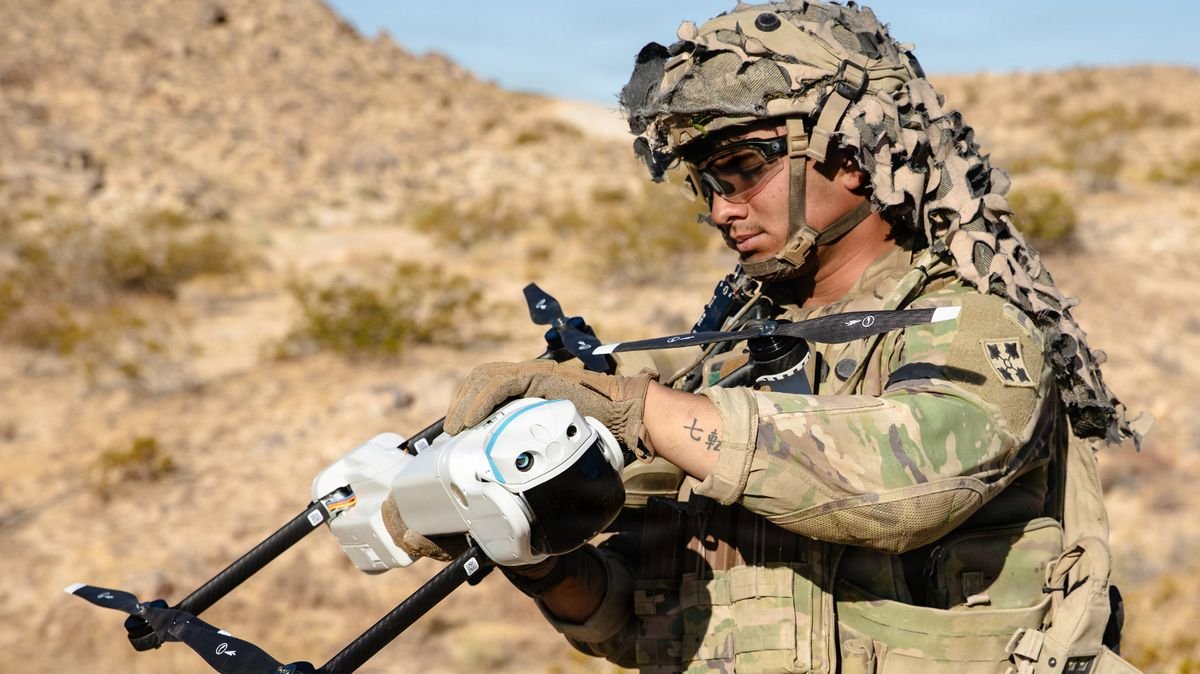
As the sun rose over the Mojave desert in California, the heat intensified, causing the distant mountains to blur in the shimmering haze. Dust coated everything, from boots to weapons to vehicles, as the air carried the scent of diesel, scorched earth, and heated metal. A British soldier emerged from a hidden spot, holding a small controller in hand.
Hovering above, nearly invisible, an unmanned aerial vehicle patrolled the skies. On a screen below, enemy positions were marked by moving dots and live feed. Coordinates were relayed, targets confirmed, and within moments, munitions were deployed beyond the perilous frontline.
Sirens wailed as the strike hit its mark, causing casualties. Survivors swiftly attended to the wounded, applying tourniquets and providing urgent care amidst the dusty chaos. Meanwhile, driverless trucks and desert buggies navigated the battlefield, transporting vital supplies, ammunition, and reinforcements.
This scene at the US Army’s National Training Centre at Fort Irwin marked the dawn of a new era in warfare, where artificial intelligence surveils from above, processes intelligence, directs vehicles, and dictates troop movements. In Project Convergence-Capstone 6 (PC-C6), the Five Eyes alliance, comprising Britain, the United States, Canada, Australia, and New Zealand, explored combat strategies against adversaries armed with drones, cyber weapons, signal jammers, and AI systems.
Traditional warfare tactics are swiftly giving way to a more interconnected, rapid, and potentially lethal battlefield environment. Drones can detect targets beyond the horizon, while AI swiftly analyzes vast streams of data to aid decision-making processes. The goal is to expedite decision-making from hours to mere seconds, enabling strikes before enemies can react.
Despite the increasing role of machines, senior officers emphasize that humans maintain control over life-and-death decisions. Colonel Jim Howard of the British Army’s Experimentation and Trials Group stressed the symbiotic relationship between AI and human operators, where AI accelerates processes while humans retain the final say.
The delicate balance between technology and human judgment is evolving, with AI playing a more prominent role in identifying threats and guiding actions. While soldiers still execute critical tasks, AI increasingly influences their perception of the battlefield.
Challenges persist, including the vulnerability of digital networks to hacking and jamming by adversaries. To counter these threats, British forces conducted electronic warfare exercises to test the resilience of their equipment against potential disruptions.
In an environment where rapid communication and adaptability are key, international cooperation and technological innovation are essential. Brigadier Karen Peek, the UK task force commander for PC-C6, emphasized the importance of trust-building among allies and readiness to face future challenges.
Ultimately, while soldiers remain at the forefront of combat, AI is undeniably reshaping the modern battlefield, serving as a critical component of military operations.

