

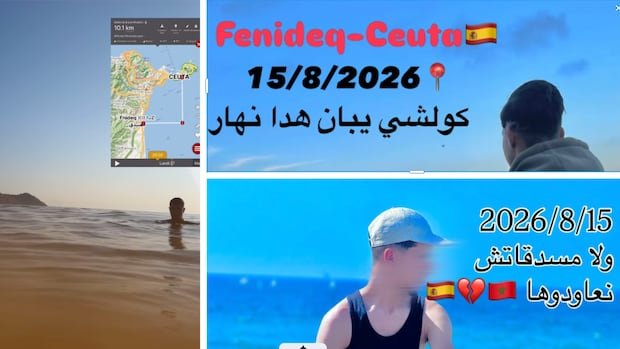
In the lead-up to the recent significant influx of migrants to Europe, a brief Instagram video went viral with 1.4 million views. The video depicted a young man submerged in water up to his neck, showcasing a sea route from Fnideq, Morocco, to Ceuta, a Spanish enclave. This video, among others on platforms like Instagram and TikTok, played a role in mobilizing irregular migration waves from Morocco into Ceuta. The online communities involved in these efforts focus on migration-related content, including music, memes, and imagery, targeting young people from Africa and the Middle East seeking better opportunities abroad.
There is a debate among various entities regarding the orchestration of the events in Ceuta, with some suggesting that migration was influenced for geopolitical purposes. However, it is evident that misinformation spread by multiple online communities played a significant role in driving the migration waves towards Ceuta during the summer.
The surge in social media activity before the first wave on July 30 was fueled by false information indicating that Spain would no longer reject migrants arriving by sea. Faceless accounts began promoting the idea of a viable crossing, leading to over 72,000 people crossing the border, creating chaos in Ceuta and triggering a political crisis in Europe.
Although most migrants who crossed in July have returned to Morocco, around 5,000 remain in Ceuta, with some living on a beach with the assistance of charities. Tragically, nearly 100 individuals lost their lives attempting the crossing.
The proliferation of misinformation and manipulation online, targeting individuals desperate for change, underscores the real-world impact of such content. Social media accounts directed followers to WhatsApp chats for planning crossings, with some offering advice and even charging fees for guidance.
After the events of July 30, Meta and TikTok collaborated to fact-check posts to prevent criminal organizations from exploiting migrants through misinformation. Despite these efforts, a new wave of posts emerged ahead of August 15, promoting another opportunity for entry into Spain. Moroccan and Spanish authorities were prepared this time, deploying thousands of police to prevent unauthorized crossings.
The surge in online activity was fueled by a combination of successful migrations to Ceuta prior to the events and the aspirational nature of migration-related messaging targeting disillusioned youth in North Africa. The desire to migrate was already present, with social media amplifying the perception that migration was feasible.
Accounts originating from North African countries, Italy, and Turkey used various tactics to entice individuals, including referencing European destinations without explicitly offering passage. The accounts tapped into the aspirations of young people facing challenges at home, portraying migration as a path to opportunity.
Despite efforts to contact accounts involved in the migration waves, communication attempts yielded no responses. The situation in Ceuta highlights the complex interplay between social media, misinformation, and real-world migration challenges.

