

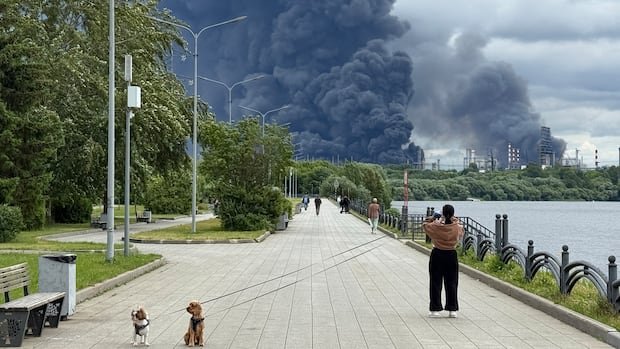
Prior to Ukraine launching its most significant assault on Moscow to date, which included striking a major refinery and causing dense black smoke to billow over the capital on Thursday, the impact of Kyiv’s escalating drone operations was keenly felt by many Russians.
In Crimea, the region annexed by Moscow in 2014, the appointed governor imposed a nighttime prohibition on motorcycles and scooters due to their resemblance to the drones frequently buzzing overhead.
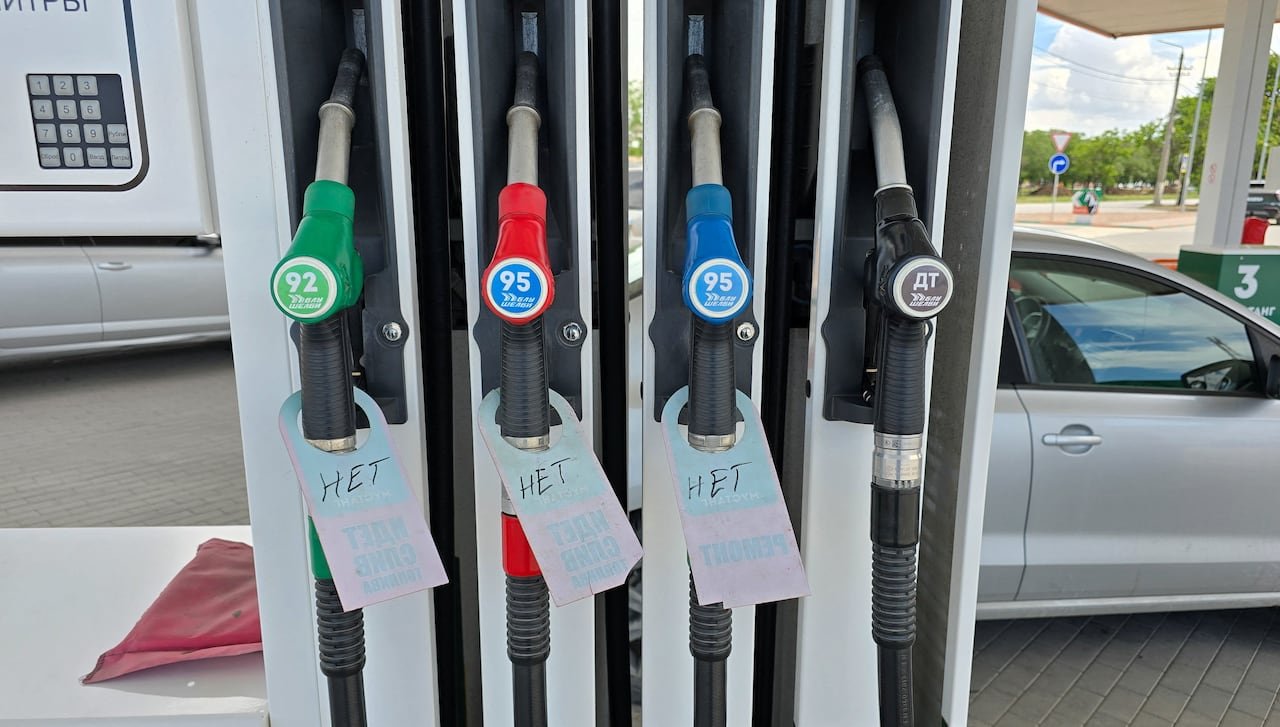
The peninsula has encountered fuel shortages, restrictions, and exasperation following Ukrainian attacks aimed at disrupting supply lines to the area.
While the Russian capital and its 13 million inhabitants have yet to witness the same fuel scarcities, analysts warn that the nation’s energy sector is facing mounting pressure as Ukraine shifts the conflict closer to the country engaged in it through a mix of long- and mid-range strikes.
“I am saddened to see civilians suffering, but it is up to the people of Moscow to halt this war,” remarked Oleksandr Kharchenko, director of the Energy Industry Research Center in Kyiv. “It is not really Putin who will bring peace.”
Most substantial assault on Russia’s capital thus far
During Ukraine’s deployment of approximately 200 drones to target Moscow and its vicinity, President Putin was absent from the capital, situated more than 700 kilometers away in Kazan, hosting leaders from Southeast Asian nations.
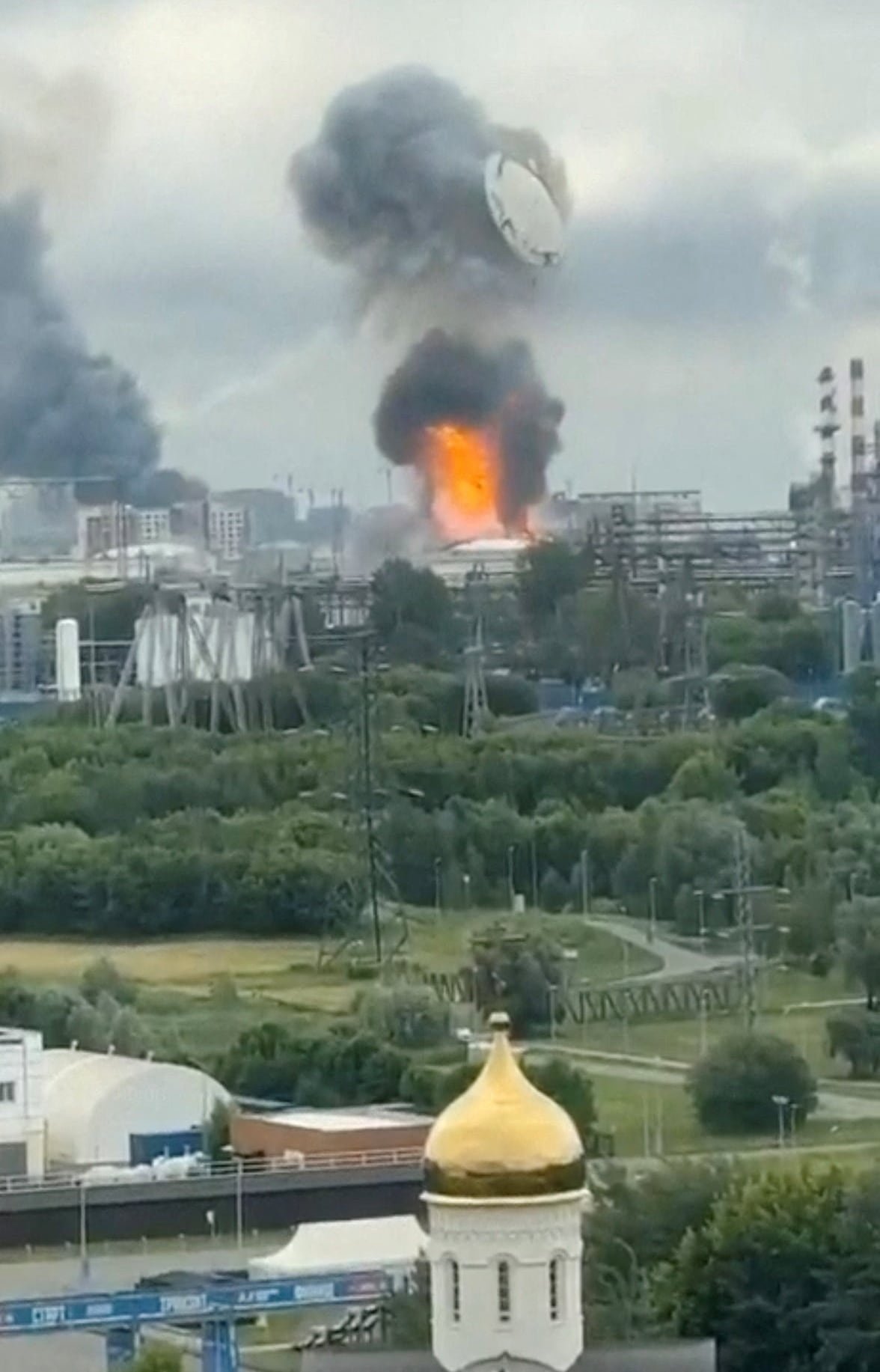
Russian authorities reported 16 injuries and the tragic death of an eight-year-old girl in the assault, which caused damage to residential buildings, a mall, and incinerated vehicles. An explosion propelled the lid of an oil storage tank skyward like a massive Frisbee.
The refinery, owned by Gazprom Neft, is located in the southeast of the city and had been catering to nearly 40% of the capital’s fuel demands before sustaining two significant strikes earlier in the week.
Online videos depicted moments of disorder and panic as air defenses attempted to intercept the drones. Subsequently, images emerged of vehicles covered in black residue, with some residents reporting dark rain falling from the sky.
On Friday, Igor Sechin, the CEO of Rosneft, Russia’s largest oil firm, informed domestic media that the country’s fuel market was facing “challenging conditions” due to heightened seasonal fuel demand and “unscheduled work at refineries.”
He assured that the company would ensure fuel supply to “essential facilities,” as well as industrial and agricultural enterprises. Although he mentioned there are “virtually no constraints on gas station refueling,” he discouraged the filling of canisters.
The Kremlin acknowledged the drone attacks on Friday, with spokesperson Dmitry Peskov stating, “Measures are being taken to address the aftermath.”
Rationing in Crimea
In Crimea, where railways, roads, and fuel transporters have been repeatedly targeted, fuel rationing measures have been implemented. The governor of Sevastopol, Crimea’s largest city, announced that the 20-liter gas limit per vehicle would persist.
This proclamation coincided with Ukraine’s military claim of striking additional railway bridges on the peninsula.

