

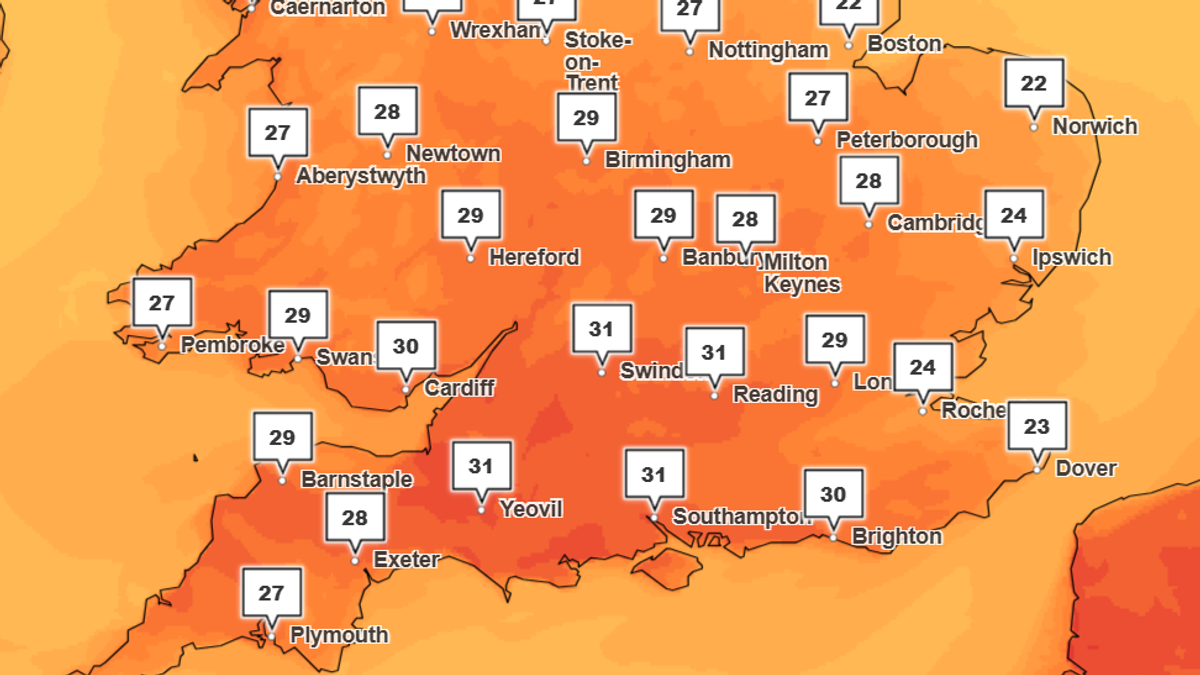
Britons are facing an imminent period of scorching hot weather that is expected to persist into the following week, as cautioned by the UK government. The UK Health Security Agency (UKHSA) has raised amber health alerts for heat, coinciding with predictions from Met Office forecasters of a more severe heatwave compared to the one experienced in May. Residents in London, the south-east, south-west, and east of England are encompassed by these health alerts, which will remain effective until 8pm on Tuesday, June 23.
The amber alert signifies that there is a high likelihood of significant impacts on health and social care services due to the soaring temperatures, leading to a potential increase in fatalities, especially among individuals aged 65 and above or with underlying health issues. The workforce’s capacity to provide services in affected regions might also be affected by the heat, as temperatures are expected to rise into the mid-30s. Additionally, yellow health alerts for heat have been issued for the east and west midlands, indicating potential service disruptions due to the high temperatures.
Government warnings coincide with forecasts projecting the arrival of a high-pressure system that will result in elevated temperatures well above the June average across much of the country. Temperatures are anticipated to reach the high 20s Celsius widely, with the south of England potentially experiencing temperatures of 32C on Sunday and possibly exceeding 34C on Monday. The Met Office has highlighted that the humid conditions will persist, increasing the likelihood of thunderstorms.
Meteorologist Honor Criswick from the Met Office emphasized the heightened humidity levels during this heatwave compared to the previous one, making the weather feel more muggy and uncomfortable. The increased humidity also raises the possibility of thunderstorms, particularly in central, southern, and south-eastern parts of England. The duration of the heatwave remains uncertain, with expectations of it lasting through the weekend and into the early part of the following week.
In a previous record-breaking heatwave last month, May 26 set a new record as the hottest May day in both England and Wales, with temperatures of 35.1C at Kew Gardens and 32.9C at Cardiff Bute Park. The UK Health Security Agency’s heat health alerts also emphasize the risks associated with water-related incidents, including cold-water shock and drowning.
During the previous heatwave from May 24 to 31, the UK witnessed a tragic toll of 19 fatalities, including children and adults, in water-related incidents. In response, the Mirror launched the ‘Save Lives for Sam’ campaign to address the concerning number of drowning incidents involving children in England annually.
As temperatures rise, people planning beach visits in the upcoming days are advised to be cautious due to relatively lower sea-surface temperatures compared to mid-summer norms. Samantha Hughes, the National Water Safety Partner at the RNLI, emphasized the importance of being aware of cold-water shock risks and following safety guidelines when entering the water. She highlighted the necessity of choosing lifeguarded beaches, swimming between designated flags, and calling 999 in coastal emergencies.

