

U.S. forces carried out a military strike on Iranian rocket launchers in the Strait of Hormuz, marking the first such action in a month, as reported by a U.S. official. This move disrupted a period of relative calm in the ongoing conflict that has spanned over six months. The official, speaking on the condition of anonymity, revealed that Iran’s Islamic Revolutionary Guard Corps (IRGC) were seen preparing to deploy rockets equipped with sea mines into the strait.
Last week, the U.S. military successfully cleared sea mines from the international shipping routes in the strait. Reports from semi-official Iranian news sources indicated hearing explosions near Larak Island in the strait. In response, the IRGC, through a statement broadcasted by Iran’s state media, acknowledged the loss and injury of several fighters and civilians, vowing retaliation against the aggressor.
Following the recent military engagement, the Trump administration announced a shift towards intensifying economic pressure rather than immediate military actions to resolve the conflict with Iran. This new approach involves imposing sanctions on any country or entity continuing business relations with Tehran. Concerns have arisen about dwindling munitions supplies after months of conflict, raising worries about the potential impact on U.S. military readiness globally.
Despite earlier aspirations for a swift resolution, President Donald Trump now indicates a more patient approach, emphasizing that there is no rush to resume negotiations with Iran. Trump has highlighted the significant damage inflicted on Iran’s navy and air force during the ongoing campaign, with Iranian officials estimating losses of $270 billion USD. Meanwhile, Israeli airstrikes early in the conflict severely disrupted Iran’s leadership hierarchy.
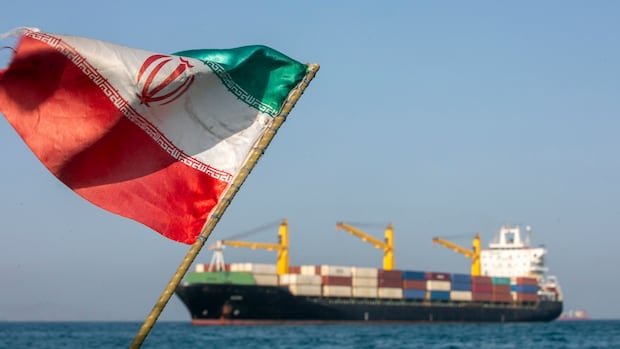
Notably, Iran has maintained influence through its actions in the strategic Strait of Hormuz, where a limited number of oil and gas vessels are transiting due to the risks. Iran’s arsenal of drones and missiles enables it to target passing vessels in the crucial waterway, which typically handles 20% of global oil traffic. Trump has repeatedly stated that the strait remains open, citing the passage of 24 vessels last week. However, this number is significantly lower than the pre-war daily average of around 130 vessels.
Recent reports from a U.S.-led naval coalition and the British military’s monitoring agency indicate that commercial traffic through the strait remains subdued. An incident involving a tanker ship being struck by an unidentified projectile north of Khasab, Oman, was reported on Saturday, with no casualties or environmental impact confirmed. The United Kingdom Maritime Trade Operations, citing military sources, reported the incident, with no immediate attribution of responsibility.

