

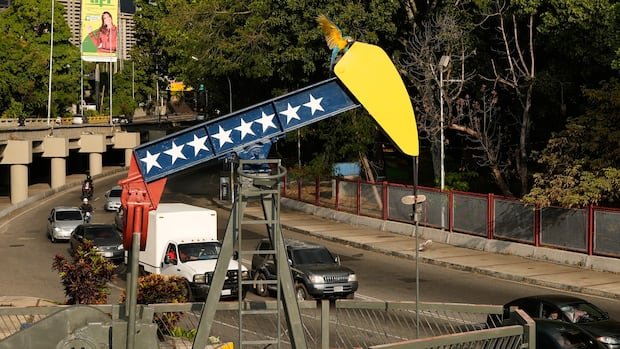
U.S. President Donald Trump has unveiled a fresh initiative to enhance oil production in Venezuela, eyeing a controlling stake in a segment of the country’s oil reserves as a strategic move towards Canada. Despite concerns that an increase in Venezuelan exports could rival the Alberta oilpatch due to their production of similar heavy oil types, experts believe Western Canada remains largely unaffected.
Venezuela holds substantial underground oil reserves, but various challenges, including political instability, hinder efforts to boost production. Conversely, the Canadian oil industry is thriving, setting production records and undergoing pipeline projects to bolster export capabilities. The U.S. continues to rely on Canadian oil imports, with over 60% of its crude oil supply sourced from Canada.
While Trump’s deal with Venezuela could potentially impact Canada, experts suggest any significant rise in Venezuelan oil exports is years away. Ed Sprague, a former Alberta deputy energy minister, highlights the substantial time and investment required for the U.S. to materialize the deal with Venezuela.
Trump’s recent announcement outlined a deal granting the U.S. majority control over a significant portion of Venezuela’s oil reserves through a private company led by a Venezuelan entrepreneur. The agreement aims to secure around 65 billion barrels of oil reserves for the U.S., while Venezuela anticipates substantial investment returns while retaining control over its natural resources.
Al Salazar, an analyst at Enverus, notes discrepancies and uncertainties surrounding the deal, prompting caution among Canadian oil executives. The Canadian industry remains watchful but awaits tangible progress in Venezuela’s oil sector revival before taking decisive actions.
The Canadian oilsands in Northern Alberta stand out as a key source of heavy oil, boasting operational stability and low production costs compared to Venezuela. Venezuela, once a major oil producer, faces deteriorating infrastructure and investment challenges, deterring major U.S. energy companies from committing substantial resources to the country.
Beyond operational hurdles, the deal faces political uncertainties, with potential leadership changes in both the U.S. and Venezuela affecting the agreement’s longevity. The history of asset seizures in Venezuela raises concerns for foreign investors, although some companies like Shell and Repsol show interest in Venezuela’s energy sector.
Despite the deal’s implications, former Alberta deputy energy minister Ed Sprague remains optimistic about Canada’s oil industry, emphasizing the diversification of markets and the development of crucial pipeline projects to meet growing global demand for oil.

