

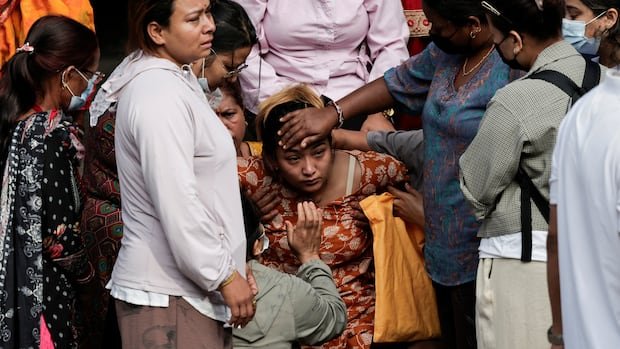
Hopes of locating additional survivors among the numerous individuals still unaccounted for in Nepal appeared to be diminishing, as authorities indicated on Wednesday, one week after a glacier collapse in the Himalayas triggered flash floods that wreaked havoc on the mountainous country.
The death toll stands at a minimum of 1,114 individuals, with almost 4,000 people still missing, with concerns that many may be trapped beneath the debris left in the wake of the floods that swept through towns and valleys close to the Chinese border.
On the other side of the border in Tibet, China has reported 16 fatalities and 546 people missing, figures that have remained unchanged since Sunday.
Phanindra Paudel, a senior official at the National Emergency Operation Center (NEOC), conveyed a diminishing hope of finding survivors, emphasizing the importance of maintaining optimism and faith in the ongoing rescue efforts.
Search and rescue teams are concentrating their efforts on locating survivors believed to be trapped inside the tunnels of various hydroelectric plants, which provide spaces and rooms for people to take shelter, as disclosed by army spokesperson Raja Ram Basnet.
Specialized rescue teams from India, China, and the United States are participating in the tunnel rescue operations, striving to reach and extract individuals still trapped in the tunnels.
As the search for survivors in the tunnels continues, Prime Minister Balendra Shah has highlighted the transition towards rehabilitation and reconstruction efforts, aiming to safeguard lives, provide essential medical aid, and offer psychological support to affected individuals.
The catastrophe has resulted in an estimated 2.2 million tons of debris, including fragments of buildings, rocks, and sediment, equivalent to the mass of six Empire State buildings, as per a preliminary evaluation by the United Nations Development Programme (UNDP).
Residents in the impacted regions are navigating through the remnants of once-vibrant villages and towns, endeavoring to salvage any possessions left amid the destruction.
Amid growing concerns about public health risks stemming from overcrowded shelters, contaminated water sources, and damaged healthcare facilities, United Nations spokesperson Stephane Dujarric underscored the need for urgent attention to address these challenges, particularly for vulnerable groups like women and children during the monsoon season.
Approximately 3,900 individuals remain unaccounted for, with around 3,500 people residing in 27 displacement sites across the worst-hit districts of Nuwakot and Rasuwa, prompting heightened surveillance and response measures by the government to avert potential disease outbreaks in the flood-affected areas.

