
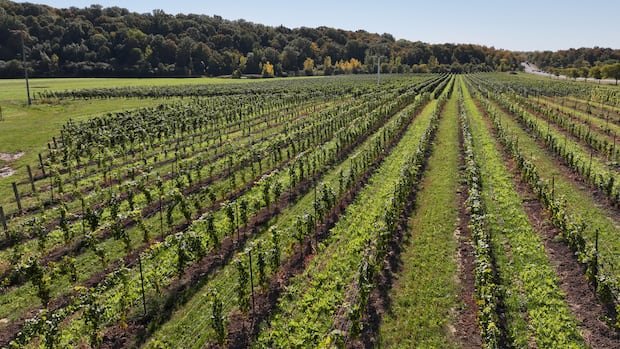
The President of the United States, Donald Trump, has issued a directive to prohibit the import of Canadian alcoholic beverages starting later this month. This decision has already impacted a winery in Ontario’s Niagara region, preventing them from selling their products to American buyers due to the significant tariffs imposed since August 22.
According to Jamie Slingerland, the director of viticulture at Pillitteri Estates Winery, the 50% tariff makes it impossible for their “very Canadian” products to compete in the U.S. market, leaving their American buyers disappointed.
Trump’s recent proclamations include banning the import of alcohol and other goods effective September 29, along with imposing 50% tariffs on various items like whey, molasses, furniture, and paper and wood products, following nearly two years of escalating trade disputes between Canada and the U.S.
To navigate the impact of the tariffs, Pillitteri Estates Winery took proactive measures by accelerating their export schedule, shipping their products four months earlier than planned to minimize the effects of the tariffs. Slingerland noted that the winery’s agility, being a smaller and independent operation, enabled them to make swift decisions.
The wine industry in Ontario plays a significant role in the economy, with 186 wineries contributing approximately $711 million in revenue and supporting around 22,000 jobs, as reported by the Grape Growers of Ontario association. Additionally, the industry has an overall economic impact of $5.49 billion for the province, encompassing tax contributions, tourism, and supplier networks.
Amid the challenges posed by the trade disruptions, Grape Growers of Ontario has recommended affected businesses explore federal support programs such as the Regional Tariff Response Initiative initiated by the Canadian government.
John Boynton, the president of Arterra Wines, expressed disappointment over the import ban, highlighting the need for stability and predictability in the industry to foster growth and investment. He emphasized the uncertainty faced by businesses, workers, and consumers due to the ongoing trade tensions and leveraged alcohol products in the Canada-U.S. trade war.
In response to the import ban, both Slingerland and Boynton have urged the federal government to renew the Wine Sector Support program, set to expire on March 31. They emphasized the importance of government support in enhancing the competitiveness and resilience of the Canadian wine sector in the current environment.
When contacted for a response, Agriculture and Agri-Food Canada affirmed the government’s commitment to collaborating with the wine industry to bolster its competitiveness and resilience. The Wine Sector Support program has provided $343 million in assistance to wineries over the past five years.

