

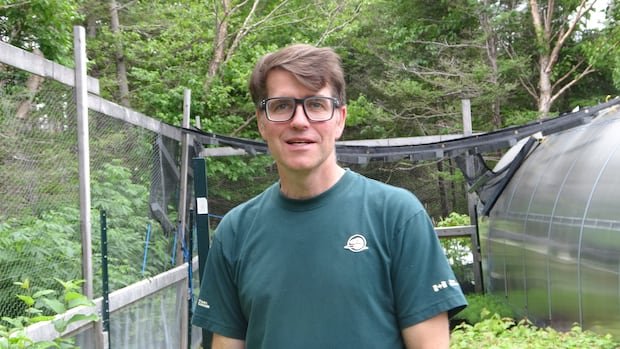
Crews in western Newfoundland’s expansive national park are undertaking a tree planting initiative to aid in the recovery of forests affected by a once prolific moose population. Darroch Whitaker, an ecosystems scientist with Parks Canada at Gros Morne National Park, reported that approximately 730,000 trees have been planted since 2023 in areas that were transformed into grasslands due to extensive moose grazing.
The planting efforts are slated to continue for another three years, with a target of 1.25 million trees covering an estimated four square kilometers. The focus is not solely on restoring the forest consumed by moose but also on selecting tree varieties that can thrive in warmer climates, ensuring the establishment of resilient forests capable of withstanding climate change impacts.
Whitaker emphasized the necessity for the planted trees to endure for generations as climatic conditions evolve. The park, renowned for its majestic fiords and boreal forests intersected by rivers and waterfalls, spans 1,805 square kilometers and stands as the second-largest national park in Atlantic Canada. Moose, although abundant across Newfoundland, flourished in Gros Morne due to a historical hunting prohibition that shielded them from their main predator, humans.
In the 1990s, the park harbored around 6,500 moose, with certain regions supporting six or more animals per square kilometer, marking some of the highest moose densities globally. Their unchecked presence led to widespread tree consumption, exacerbating areas already struggling with forest regeneration due to factors like beetle infestations. To address the issue, the park initiated moose hunting in 2011, gradually reducing the population to a manageable 2,000 animals.
In 2023, tree planters descended into the moose meadows armed with two-year-old saplings to kickstart the forest restoration process. The saplings, mainly black and white spruce and balsam fir, are supplemented with unique tree species like yellow birch, white pine, and wild cherry from the park’s southern regions. By incorporating seeds sourced from the park’s warmer zones, the planting strategy aims to ensure the trees’ adaptability to projected climate shifts as they mature.
Whitaker stressed that trees depend on human intervention for migration in response to changing climates, underscoring the significance of proactive measures in aiding their survival. The meticulous selection and planting of trees reflect a forward-looking approach to safeguarding Gros Morne’s ecosystems for the future.

