
Spanish Prime Minister Pedro Sánchez has announced a snap election on October 5 amidst widespread protests across Spain concerning the affordability of housing. The election, set for November 29, will conclude Sánchez’s term prematurely, showcasing a bold move by the prime minister known for his willingness to take risks.
The decision to call for the election came after the government faced challenges in gaining parliamentary backing for two proposed initiatives aimed at tackling Spain’s housing crisis. However, just a day after the election announcement, the government approved the two decrees with certain modifications. These measures involve implementing rent caps, temporarily halting evictions, and limiting corporations from purchasing residential properties.
Sofía Olivares, a 25-year-old student and spokesperson for the housing advocacy group Derecho al Techo (Right to Housing), criticized the government’s delayed response to social housing issues amidst the escalating protests and unrest across the country.
While polls indicate a potential victory for right-wing parties, Sánchez is banking on the housing crisis to garner the necessary political support to secure a parliamentary majority. Since assuming office in 2018, he has relied on alliances with other parties for governance due to his socialist party’s lack of a majority in parliament.
By placing housing affordability at the forefront of his campaign, Sánchez aims to rally progressive voters and divert attention from other pressing political challenges, such as corruption probes involving his inner circle and the crisis in Ceuta.
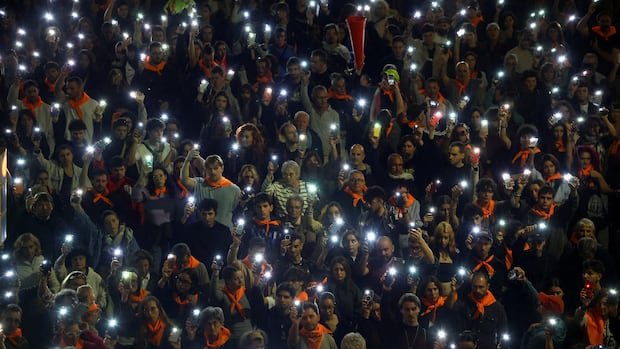
The demonstrations against housing conditions erupted following the eviction of 87-year-old María del Carmen Abascal, known as Maricarmen, who became a symbolic figure of the crisis before her passing on October 7.
In Las Palmas de Gran Canaria, residents have also taken to the streets in recent weeks to protest the housing situation, blaming the regional government for prioritizing tourism over housing policies.
Concerns over property funds buying buildings, refusing to renew contracts, and displacing tenants have fueled the crisis, with limited social housing options exacerbating the situation. Spain’s housing stock includes only about 1.7% allocated to social housing, significantly lower than EU standards.
Right-wing parties argue that Sánchez’s migration policies are straining Spain’s housing market, while the People’s Party and Vox are leading the conservative coalition in polls for the upcoming election.
The government’s attempts to regulate rental properties have faced opposition from the real estate industry, which maintains that the focus should be on addressing the root cause: Spain’s structural housing shortage.
Moreover, calls for increased investment in public housing, expedited land development, and streamlined building permits have emerged to tackle the housing crisis effectively.
Garazi González, a resident who experienced firsthand the challenges of housing affordability, supports the protests and emphasizes the need to prevent far-right influence in government to safeguard social rights for future generations, expressing concerns about the return of fascism.
Overall, the housing crisis in Spain has become a pivotal issue in the upcoming election, shaping the political landscape and influencing voter sentiments.

