
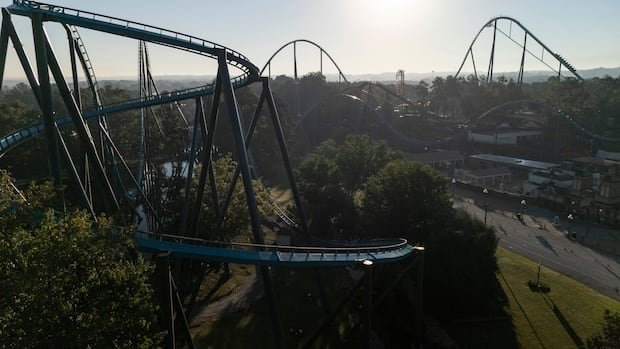
Canadians can rest assured that riding roller-coasters remains safe despite a recent tragedy at a Six Flags amusement park in the U.S., according to experts interviewed by CBC News. Fatal incidents on roller-coasters are exceptionally uncommon. A 42-year-old man lost his life while riding the Goliath roller-coaster at Six Flags Over Georgia in Mableton, Georgia. He was thrown from his seat, hitting other riders before landing beneath the ride. Multiple individuals sustained injuries in the incident.
In response to the tragedy, Six Flags Entertainment Corp. has closed nine similar roller-coasters across six North American parks as a precautionary measure, including two at Canada’s Wonderland near Toronto and one at Montreal’s La Ronde amusement park. Doug Perovic, a materials science and engineering professor at the University of Toronto, expressed confidence in the safety of the Goliath coaster, having ridden it numerous times with his son at Six Flags Magic Mountain in California.
Experts suggest that the cause of the Goliath incident is yet to be determined due to limited information released. However, Perovic speculated that a potential failure in the restraint system might have occurred. Investigations will focus on whether a manufacturing defect or an oversight in inspection protocols contributed to the tragic event.
Kathryn Woodcock, a professor at Toronto Metropolitan University’s School of Occupational and Public Health, emphasized the complexity of roller-coaster safety systems and the necessity of awaiting conclusive findings. Roller-coasters adhere to internationally recognized standards, with manufacturers implementing inspection programs tailored to detect potential failures. Despite built-in testing mechanisms and redundancy in ride automation systems, accidents, although rare, can still happen.
While roller-coaster accidents garner significant media attention, they remain infrequent. The National Safety Council reported 1,360 injuries from fixed-site amusement rides in North America in 2024, with the majority attributed to guest-related factors. The likelihood of sustaining a serious injury on a fixed-site ride at a U.S. amusement park is estimated at one in 15.5 million rides.
Perovic cautioned that even well-functioning roller-coasters could pose increased risks to certain riders. Recent incidents involving extreme rides, such as the retirement of the X2 coaster at Six Flags Magic Mountain due to lawsuits alleging severe injuries, highlight potential hazards. Consulting a physician before experiencing extreme rides may be advisable, as the pursuit of speed and height in roller-coaster designs can lead to excessive forces that may not suit all individuals.

