

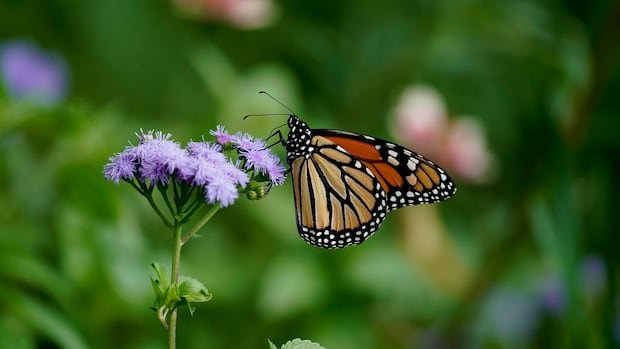
MaryAnn Lepp has observed a notable increase in monarch butterflies undergoing their transformation in her garden, with 20 caterpillars feeding on her swamp milkweed in just one day this week. This surge of activity is being witnessed by numerous Canadian monarch enthusiasts, as backyard milkweed patches thrive in the wet and hot conditions in certain parts of the Prairie this summer.
Excitedly scanning her garden in La Broquerie, located about 60 kilometers southeast of Winnipeg, Lepp exclaimed, “This is chrysalis No. 2… I’m so thrilled.” She noted a higher presence of butterflies this year compared to previous years.
While conservation experts cannot definitively attribute the surge to favorable weather conditions, they acknowledge the abundance of anecdotal reports of caterpillars, chrysalises, and monarch butterflies as a positive indication for the federally endangered species. Marika Olynyk, the curator of the Living Prairie Museum, reported a significant number of monarchs in Winnipeg this year, emphasizing the ongoing presence of caterpillars, chrysalises, and butterflies throughout the summer.
The tall grass prairie preserve in Winnipeg provides a habitat rich in native plants that attract pollinators, including various milkweed species. Monarch butterflies primarily feed on nectar from milkweed flowers, while caterpillars exclusively consume milkweed leaves, highlighting their selective nature during the early stages of development.
Despite efforts by individuals like Lepp to plant milkweed and native wildflowers, these species remain scarce compared to historical levels due to the conversion of native grasslands to farmland. Habitat loss poses a significant threat to monarchs, with the disappearance of tallgrass prairies across North America exacerbating the decline in both species and their habitats.
Recognizing the urgent need for conservation measures, in 2016, the Committee on the Status of Endangered Wildlife in Canada designated the monarch as an endangered species. Subsequently, in December 2023, the federal government implemented regulations prohibiting harm or capture of monarchs on federal lands to protect the species.
Monarch populations are closely monitored through assessments of their wintering grounds in Mexico, with conservationists estimating that the current population is only at 50% of a sustainable level. Despite increasing awareness and conservation efforts, ongoing vigilance is required to ensure the survival of monarchs and other butterfly species.
In addition to the thriving monarch populations, the Assiniboine Park Zoo’s native prairie garden has seen encouraging numbers of the critically endangered Poweshiek skipperling butterfly. The zoo’s conservation programs manager, Laura Burns, highlighted the zoo’s breeding and release initiatives aimed at bolstering the Poweshiek skipperling population, with recent sightings indicating progress towards recovery.
As monarch and Poweshiek skipperling populations show signs of improvement, the impact of favorable weather conditions on butterfly populations underscores the importance of ongoing conservation efforts. By fostering a deeper connection with nature and promoting biodiversity, individuals like Lepp are playing a vital role in preserving these delicate species and their habitats.