

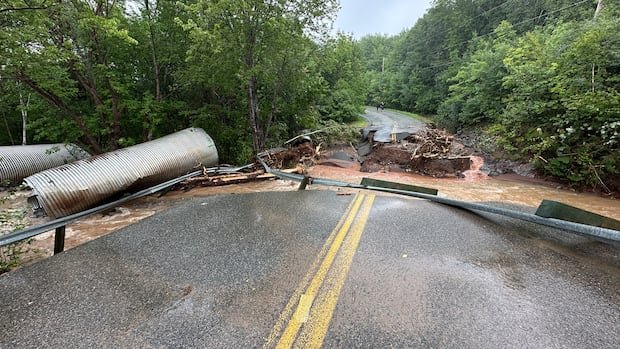
A memorable storm hit Cape Breton in September 2026, causing significant rainfall. The slow-moving system brought heavy rain from the south on Friday and Friday night, particularly affecting Richmond County. Rainfall rates reached 20 to 30 millimetres per hour during that time.
Infrastructure struggled to cope with the intense rainfall, with Sampsonville’s weather station recording 150 millimetres in just six hours. Eskasoni also saw 71 millimetres in three hours. The storm continued to bring in moisture from the east and northeast, leading to more heavy rain on Saturday, especially in Victoria and Cape Breton counties, including metro Sydney.
By Sunday night and into Monday, storm totals exceeded 250 to 300 millimetres in some parts of Victoria County. Forecast models had predicted the storm and heavy rainfall, with widespread totals of 80 to 150 millimetres across the island. While some models indicated localized pockets of over 200 millimetres, the extreme rates of 20 to 30 millimetres per hour on Friday night were not anticipated.
The storm is now added to a list of severe weather events in the region over the past decade, including Snowmageddon in February 2024, Hurricane Fiona in September 2022, Victoria County flooding in November 2021, and the Thanksgiving floods of October 2016. While it’s difficult to directly link any single storm to climate change, the increasing frequency and severity of severe weather events suggest a trend toward more intense storms impacting Cape Breton and the province.

