
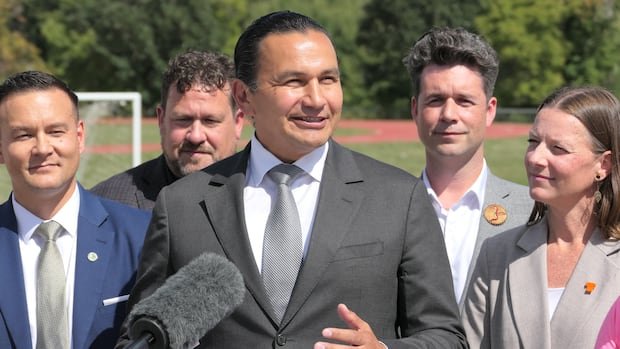
Manitoba is introducing an incentive to attract investors to support the proposed expansion of the Port of Churchill by providing a provincial sales tax exemption, as announced by Premier Wab Kinew. The tax exemption will be applicable to projects such as the development of an energy corridor, construction of liquefied natural gas facilities, enhancements to railway infrastructure, and the acquisition of icebreaking vessels to facilitate year-round shipping.
Kinew, who is currently in Toronto for the Canada Investment Summit, unveiled the tax measure at the Canadian Global Growth Forum as part of efforts to entice potential investors. Emphasizing the significance of the initiative, Kinew stated that these capital incentives aim to facilitate early investment opportunities in one of the major projects showcased at the summit.
During the summit, Kinew is scheduled to engage with numerous global investment firms to promote the Port of Churchill expansion, as well as other key projects in mining, infrastructure, and agriculture within the province. The government plans to release a comprehensive list of projects eligible for the PST exemption at a later date.
In a separate development, recent studies commissioned by the province indicated the feasibility of extending the Port of Churchill’s shipping season to year-round with the assistance of advanced icebreaking vessels. The expansion of the port, along with upgrades to the Hudson Bay Railway and the establishment of an offshore liquefied natural gas terminal in Hudson Bay, could cost an estimated $70 billion to $80 billion, according to Kinew’s previous estimates.
The proposed expansion of the port was identified by the federal government as a “transformative” project, although significant enhancements are required. Prime Minister Mark Carney has expressed interest in commencing gas shipments through the port by 2030, as highlighted by the premier. Manitoba’s delegation at the Canada Investment Summit includes Finance Minister Adrien Sala, Minister of Business, Mining, Trade, and Job Creation Jamie Moses, as well as representatives from the business community and First Nations and Métis leaders.

