

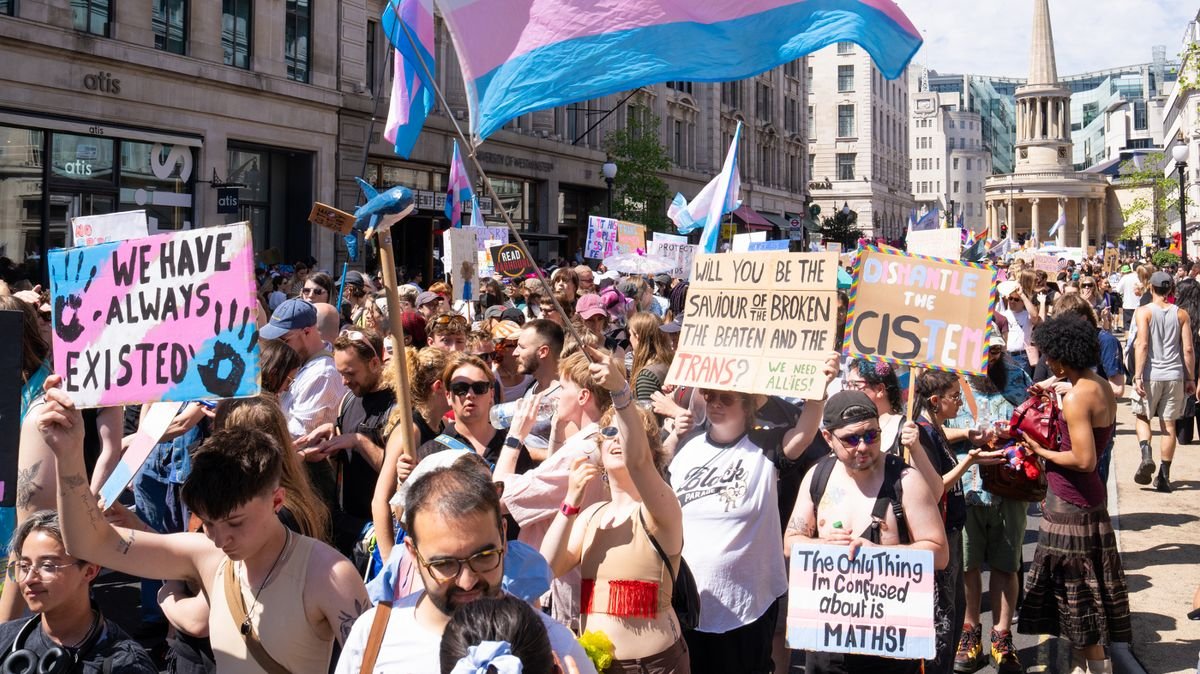
An estimated 150,000 individuals participated in the largest trans pride event in the world, according to organizers. Demonstrators expressed frustration over new guidelines regarding single-sex spaces and urged Prime Minister Andy Burnham to support the transgender community. The march, held on a scorching Saturday, commenced near the central London headquarters of the BBC. Placards carried messages such as “let people p*** in peace,” “marching for all my trans siblings past and present,” and “these meds save lives.”
The event culminated in crowds overflowing into Trafalgar Square, where attendees gathered to listen to speeches amidst artist Teresa Margolles’s sculpture featuring face casts of 726 trans, non-binary, and gender non-conforming individuals. It marked the first occasion the rally’s conclusion took place in the square, described by Lewis G Burton, a founding member of London Trans+ Pride, as a space belonging to everyone.
Burton stated, “Every participant in today’s march demonstrates our resilience, our ability to spread joy louder than the negativity, and our commitment to the safety, visibility, and freedom of every trans individual.” Prior to the march, Caroline Litman, a former NHS psychiatrist and mother to a deceased trans woman, emphasized the dire consequences of anti-trans policies, highlighting the challenges her daughter faced in accessing gender-affirming care.
Litman expressed disappointment over the worsening situation for trans individuals, citing instances of discrimination and difficulties in seeking care. She urged Burnham to reverse the policies that contribute to such hardships, echoing the sentiment that more lives are at risk without necessary changes. The discussion also touched on recent guidelines from the Equality and Human Rights Commission and the impact of policies on the well-being of transgender youth.
In response to the ongoing debate, Burnham, while serving as Greater Manchester mayor, advocated for a harmonious approach and emphasized the need for inclusive decision-making based on the Supreme Court ruling regarding sex and gender definitions. The EHRC guidelines, aligning services with biological sex rather than gender identity, emerged following the legal interpretation of the Equality Act.
Award-winning author Juno Dawson chimed in before the march, urging Burnham to take a stand in support of trans rights, particularly in light of Manchester’s inclusive reputation. Dawson emphasized the importance of political leaders aligning with public opinion and acting with compassion, especially when faced with media scrutiny and conflicting interests.
The government reiterated its commitment to safeguarding the rights and well-being of the LGBT+ community, emphasizing existing legal protections against discrimination and harassment. Measures to combat hate crimes, enhance healthcare services, and promote inclusivity were highlighted as part of ongoing efforts to support LGBTQ+ individuals.
For those struggling, Samaritans provide round-the-clock support at 116 123 or through their website. To access preferred news sources like Daily Mirror on Google News, readers can select them for quick updates.

