
After an extensive eight-year pursuit for funding, Kimberley City has successfully secured $400,000 to investigate the potential impact of wildfires on its drinking water supply. The initiative stems from concerns raised by the 2018 Meachen Creek fire, highlighting the susceptibility of local water sources.
Mathieu Bourbonnais, an assistant professor at the University of British Columbia (UBC) Okanagan and co-director of the Centre for Wildfire Coexistence, emphasized the importance of not taking drinking water for granted. He pointed out that while people often assume access to clean water will always be available at the turn of a tap, the changing dynamics of ecosystems due to wildfires are altering this security.
Kimberley draws its drinking water from the Mark Creek and Matthew Creek watersheds, with potential risks posed by severe wildfires affecting both the quality and availability of water long after the flames have been extinguished. The recently secured funding aims to identify these risks and develop strategies to mitigate them without compromising the integrity of the water supply.
The summer’s Matthew Creek wildfire, which led to an evacuation alert for the entire city, has refocused attention on the vulnerabilities of Kimberley’s watersheds. Wildland fire ecologist Bob Gray indicated that the recent fire’s impact on water flow is expected to be minimal, as the severely burned areas were limited and situated higher on the slopes, while areas closer to the river experienced less severe burning.
Looking ahead, Bourbonnais’s lab at UBC Okanagan, in collaboration with the city and Gray, is conducting research to model potential fire behavior in the Mark Creek watershed. The study will assess forest conditions, weather patterns, and climate change projections up to 2060 while analyzing the potential effects of severe fires on water quality, streamflows, and reservoir water levels.
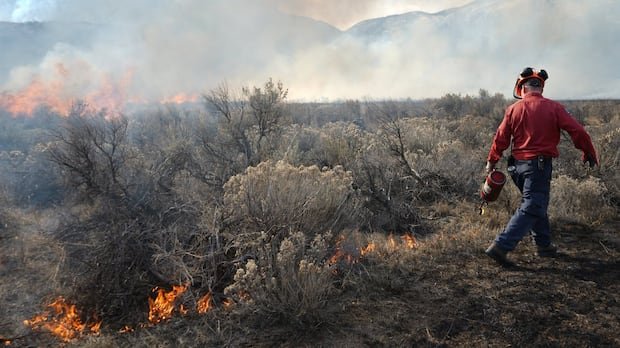
The research will also help pinpoint areas where forest thinning, harvesting, and prescribed burning could mitigate wildfire risks. However, Bourbonnais emphasized the need to balance these mitigation efforts with their impact on hydrology to prevent unintended consequences.
The project, expected to span two years, is supported by a $300,000 contribution from the Columbia Basin Trust, with the city providing the remaining $100,000. The outcomes of the study will not only inform future wildfire mitigation strategies in Kimberley but will also serve as a valuable planning resource for other communities facing similar challenges. Bourbonnais stressed the importance of proactive measures, highlighting that the risk of inaction outweighs the risk of taking preemptive steps.

