
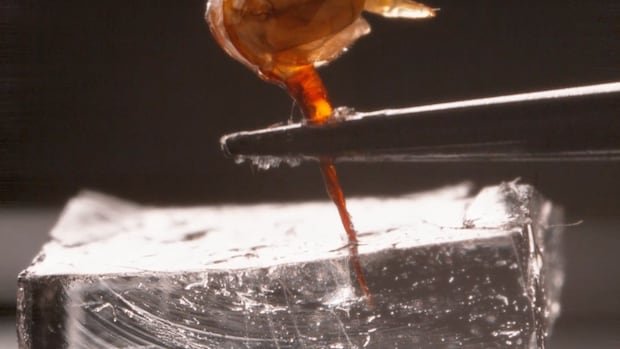
A western honey bee’s stinger is a final line of defense, intended to penetrate and deliver venom, often resulting in the bee’s demise. Recent research published in the Proceedings of the National Academy of Sciences delves into the effectiveness of this mechanism by using modern cameras to capture the action.
Lead author Fiorella Ramirez Esquivel, a postdoctoral researcher at Macquarie University, highlighted the novelty of filming the bees in action, made possible by high-speed cameras capable of capturing hundreds of frames per second. The study focused on the intricate design of the bee’s stinger, which allowed researchers to illuminate the structures involved using strong lighting.
Experiments involved live honey bees, where researchers removed the stinger and immediately euthanized the bees due to the limited active period of the stinger once detached from the bee’s body. Ramirez Esquivel emphasized the precision required in quickly positioning the stinger into an artificial skin substitute within a narrow four-millimeter space.
The research unveiled a unique double-piston design within the stinger, where specialized valves drive the stinger deeper while continuously pumping venom from the sac. This intricate mechanism, described as more complex than a standard car engine, involves the synchronized movement of two valves past each other to facilitate venom flow.
The study sheds light on the evolutionary significance of the honey bee’s stinging apparatus, serving as an insurance policy for the larger colony’s defense. Unlike other bees, female worker honey bees sacrifice their lives during stinging events due to their sterile nature, contrasting with bees that need to survive for reproductive purposes.
Furthermore, honey bee stingers release pheromones to recruit other bees for defense. While the defense mechanism may not be effective against all threats, the barbs and continuous penetration enhance the chances of repelling attackers. The findings also hint at potential medical applications stemming from a deeper understanding of this intricate system.
The exploration of the honey bee’s stinging mechanism raises questions about other honey-producing bee species and their absence of stingers. The study’s detailed findings offer valuable insights into the complex and fascinating world of bee biology.

