

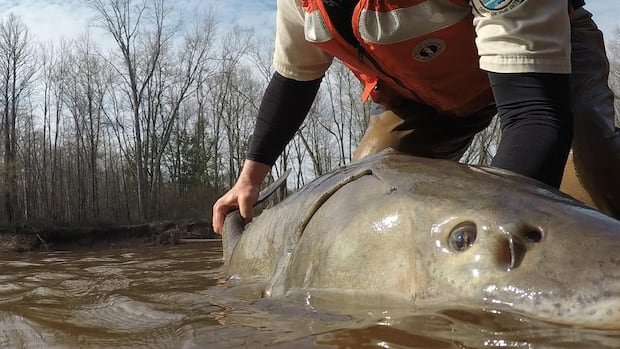
A recent study reveals that some lake sturgeon inhabiting the Great Lakes today may have been alive when Samuel de Champlain first reached Lake Huron over 400 years ago. These ancient-looking fish, known for their armor-like appearance, are now believed to have a much longer lifespan than previously assumed, potentially exceeding 400 years. Despite their remarkable longevity, the lake sturgeon population has faced severe challenges, with Ontario listing them as a species at risk and endangered specifically in the Great Lakes region.
Historically, overfishing and habitat destruction led to the decimation of about 99% of the lake sturgeon population. Even today, efforts are ongoing to aid in the recovery of sturgeon populations, with human intervention such as raising and releasing young sturgeon playing a crucial role in the process.
The study, led by Ed Baker, a fisheries scientist with the Michigan Department of Natural Resources, utilized over four decades of data on captured and recaptured lake sturgeon across the Great Lakes. The findings suggest that the road to recovery for these fish may be a more extended endeavor than initially anticipated.
Unlike traditional estimates of a sturgeon’s lifespan, which capped at around 150 years, the study employed a unique approach to calculate the age of sturgeon by analyzing their growth patterns over time. By examining growth rates between captures, researchers were able to model the time it takes for sturgeon to reach full maturity, leading to surprising age estimates that span centuries in some cases.
This discovery poses new challenges for conservation efforts, as Trevor Pitcher, a biologist at the University of Windsor, notes. With sturgeon potentially living for centuries, the existing century-long conservation plans may need reevaluation to align with the extended lifespans of these ancient fish. Adjustments in restoration strategies and habitat conservation efforts may be necessary to ensure the long-term survival of the sturgeon populations across the Great Lakes.
Additionally, sturgeon play a crucial role in the ecosystem by preying on invasive species like quagga mussels and gobies. The decline of sturgeon due to human activities has disrupted the delicate balance of the food web, emphasizing the importance of their conservation.
For Perry McLeod-Shabogesic, an elder from Nipissing First Nation, lake sturgeon hold cultural significance beyond their ecological role. Revered as “grandfather fish” for their longevity and wisdom, sturgeon are considered elders in Anishinaabe tradition. Their ancient lineage, dating back millions of years, and the decline of their populations due to human activities highlight the need for concerted conservation efforts to protect these iconic species.
McLeod-Shabogesic emphasizes the unique position of sturgeon in the natural world, describing them as beings that exist “in between” categories, much like the two-spirit concept in Anishinaabe teachings. Their enigmatic nature and symbolic significance in indigenous culture underscore the importance of preserving these ancient creatures for future generations.

