

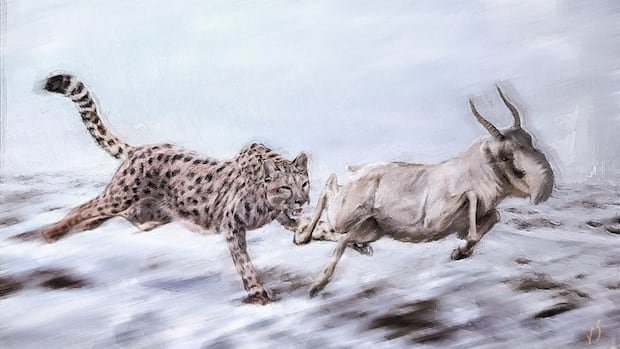
A discovery in the Bluefish Caves and a mine site in northern Yukon initially suggested the presence of an ice-age puma or cougar based on bones found. However, DNA analysis conducted by the University of California revealed a different story. The analysis, carried out by Molly Cassatt-Johnstone, a lab technician fresh out of her undergraduate studies, revealed that the Yukon bones were not from pumas as previously thought but were actually from cheetahs.
This revelation surprised Yukon paleontologist Grant Zazula, who received the message that the “cougars” were, in fact, cheetahs. Zazula noted that twenty-five years ago, the idea of studying ancient DNA seemed like science fiction, but now, genetic analysis on permafrost-preserved bones in the Yukon is a common practice.
Cassatt-Johnstone’s identification of the Yukon Miracinonyx, also known as the extinct American cheetah, marked a significant milestone. She is now the lead author of a paper published in Current Biology that provides new insights into the diet and habitat of the ice-age cat.
Researchers had previously believed that the American cheetah, resembling modern cheetahs with long limbs and a slender build, would have evolved to hunt pronghorns in grassy plains. Finding these cheetahs in the Arctic tundra puzzled paleontologists, as there were no pronghorns in Beringia, the region where Asia and North America once connected.
To unravel this mystery, researchers, including collaborators from Canada and the U.S., employed stable isotope analysis. This technique, commonly used in forensics, examines chemical signatures to determine ancient diet and environmental conditions. The analysis of bone samples from the cheetahs revealed a surprising diet focused mainly on fish, a behavior uncommon among past and present-day cats.
The study’s findings shed light on the unique behavior of the Yukon cheetahs, showcasing their adaptation to the abundant salmon runs in the region. The research also revealed that Miracinonyx was genetically closer to North American pumas than African cheetahs. The low genetic diversity of the cheetahs might have contributed to their eventual extinction, as it limited their adaptive potential.
Grant Zazula suggested renaming this distinct northern population from ‘American Cheetah’ to ‘Yukon Cheetah’ in light of the discovery. He emphasized that every bone found in the Yukon could unveil a new chapter in the region’s paleontological history.

