

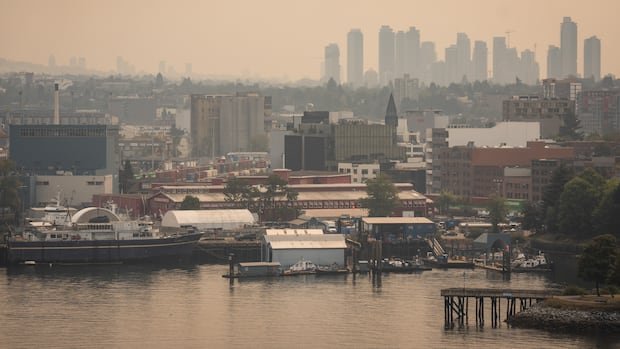
Evacuation orders are gradually being lifted in regions affected by major wildfires in British Columbia, such as Clinton and Summerland. The B.C. Wildfire Service warns that smoke covering the southern part of the province is expected to persist until Sunday. Unstable weather conditions could trigger more lightning-induced fires in the area.
After weeks of closure due to the Pear Lake wildfire, a section of Highway 97 near Cache Creek has reopened with limitations. The ongoing smoke is impacting surface temperatures and visibility for firefighting aircraft, although it could assist ground crews. Fire officials are closely monitoring lightning strikes, which pose a heightened risk of wildfires, especially in south-central British Columbia.
The fire service is bolstering its firefighting efforts with personnel from New Brunswick and Quebec to combat over 120 active fires in the province, primarily ignited by lightning strikes. As evacuation orders ease, residents are gradually returning to their homes, but the landscape changes caused by the fires are evident, with some homes destroyed along highways.
The Pear Lake wildfire remains the largest in B.C., spanning 1,593 square kilometers. Highways previously closed due to wildfires, including Highway 97 and a stretch in the Okanagan region, have partially or fully reopened, albeit with restrictions and no stopping allowed in active fire zones. The Bald Range wildfire near Summerland continues to expand, covering more than 205 square kilometers, while the Brunswick Creek wildfire complex near Boston Bar spans over 700 square kilometers.
Authorities advise caution and vigilance as the wildfire situation evolves. Residents are urged to stay informed and follow safety guidelines as firefighting efforts continue across British Columbia.

