

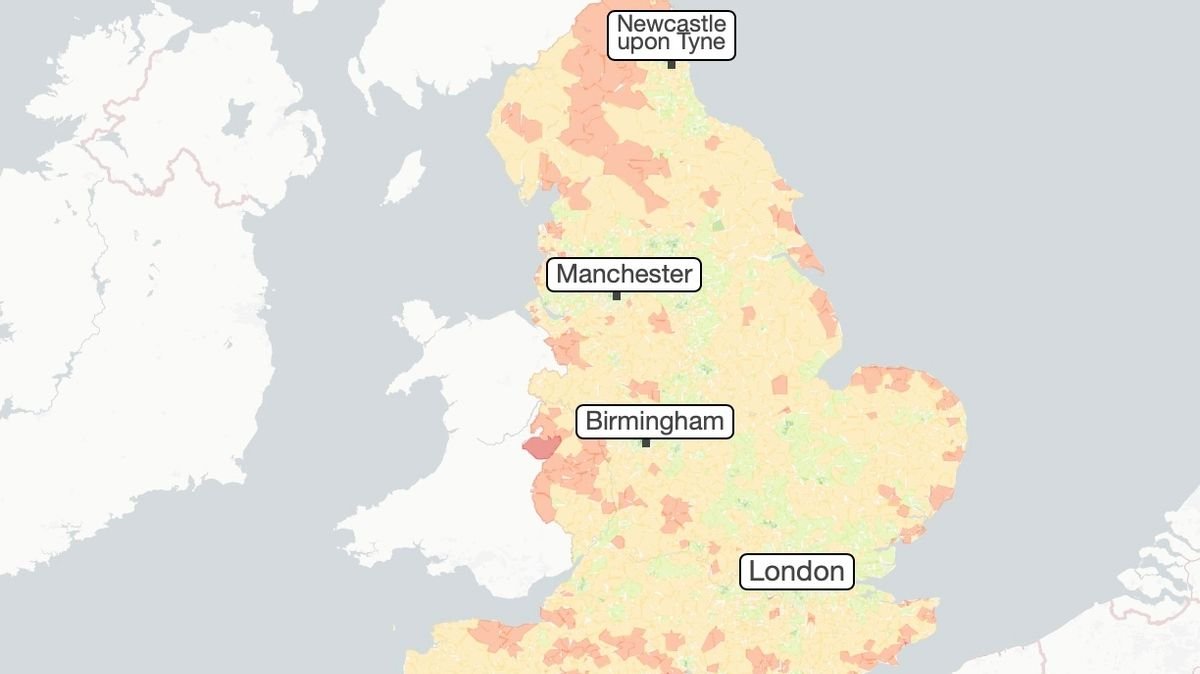
Britons residing in specific coastal regions face a higher likelihood of dealing with cancer compared to other areas, as per recent maps pinpointing neighborhoods with elevated cancer rates. Approximately 3.5 million individuals in the UK are either living with cancer or in remission, with around 400,000 new cases reported annually. Data from the House of Commons Library sheds light on particular regions in England and Wales that have seen a significant number of cancer diagnoses since 2003.
Coastal and rural zones tend to have a greater number of cancer survivors, with areas like New Forest in the South East and East Devon in the South West standing out for having some of the highest cancer rates. The increased prevalence in these areas may be attributed to their larger populations of older residents, as age is a major risk factor for cancer.
Six of the top 10 neighborhoods with the highest cancer rates are located in the New Forest, known historically for elevated melanoma rates due to an older populace and active outdoor lifestyles exposing residents to UV light. For instance, in areas like New Milton West in New Forest and Sidmouth Sidford in East Devon, around 8.44% and 8.40% of residents respectively are either battling cancer or in remission. These regions have older age demographics compared to a majority of neighborhoods in England and Wales.
Conversely, Leeds City Centre boasts the lowest proportion of cancer cases in the nation, with only 0.5% of its population affected. This can be attributed to the city’s notably young average resident age of 26, with less than 1% of its population aged 65 and above.
The data covers middle super output areas, comprising 2,000 to 6,000 households or roughly 5,000 to 15,000 individuals. It focuses on patients registered with GP practices last year with cancer diagnoses since 2003, as per NHS standards for recording cancer prevalence.
Matt Sample, senior health policy manager at Cancer Research UK, highlighted that cancer rates vary across the UK due to factors like older populations in certain regions. He emphasized the importance of ensuring equitable access to cancer care and the need for sustained efforts to improve diagnosis, treatment, and support services tailored to local needs.

