

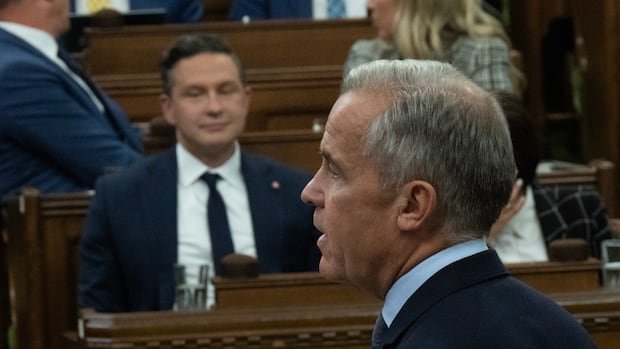
Conservatives are urging the Liberal government to make public the contents of the U.S. tariff deal that was turned down last week. While some believe transparency could foster national unity, others argue it may weaken Canada’s negotiating stance.
Following failed negotiations, U.S. President Donald Trump imposed 50% tariffs on numerous Canadian goods over the weekend, despite signs of progress. Prime Minister Mark Carney stated that the American demands were excessive and the offers insufficient for a final agreement.
Conservative MPs are pressing Carney to disclose the specifics of the rejected deal. Conservative Leader Pierre Poilievre emphasized the importance of transparency, insisting that Canadians deserve to know the terms under consideration.
Bloc Québécois Leader Yves-François Blanchet expressed openness to the deal’s release, emphasizing that transparency is less critical now that an agreement has not been reached.
Trade expert Lawrence Herman cautioned against divulging detailed negotiation information, citing the need for confidentiality in trade talks to avoid undermining Canada’s position in future discussions.
On the other hand, Carlo Dade of the University of Calgary advocated for transparency, noting that the U.S. trade demands align with those made to other nations, emphasizing the global implications of the negotiations.
Regarding calls to make the draft agreement public, Finance Minister François-Philippe Champagne pointed out that much of the negotiation details have already been reported in the media, highlighting the transparency of the process.
Conservative Leader Poilievre claimed that the U.S. likely has knowledge of Canada’s offers, emphasizing the lack of national secrets in the text. However, former cabinet minister Jason Kenney countered, stating that negotiations involve multiple versions and verbal exchanges, not just a final text.
While some experts like Herman stressed the need for confidentiality in trade talks, they acknowledged the government should outline its trade objectives. Dade suggested that while Canada should be transparent, its unique position in ongoing trade agreements requires careful consideration.
Dade further highlighted the potential implications of Section 338 of the U.S. Tariff Act, which Trump used to impose tariffs, suggesting that the tactic could be used to create divisions among provinces. He emphasized the importance of transparency to maintain national unity and prevent jurisdictional conflicts.
In conclusion, the debate continues on whether releasing the details of the rejected U.S. tariff agreement would benefit or harm Canada’s trade negotiation strategies.

