

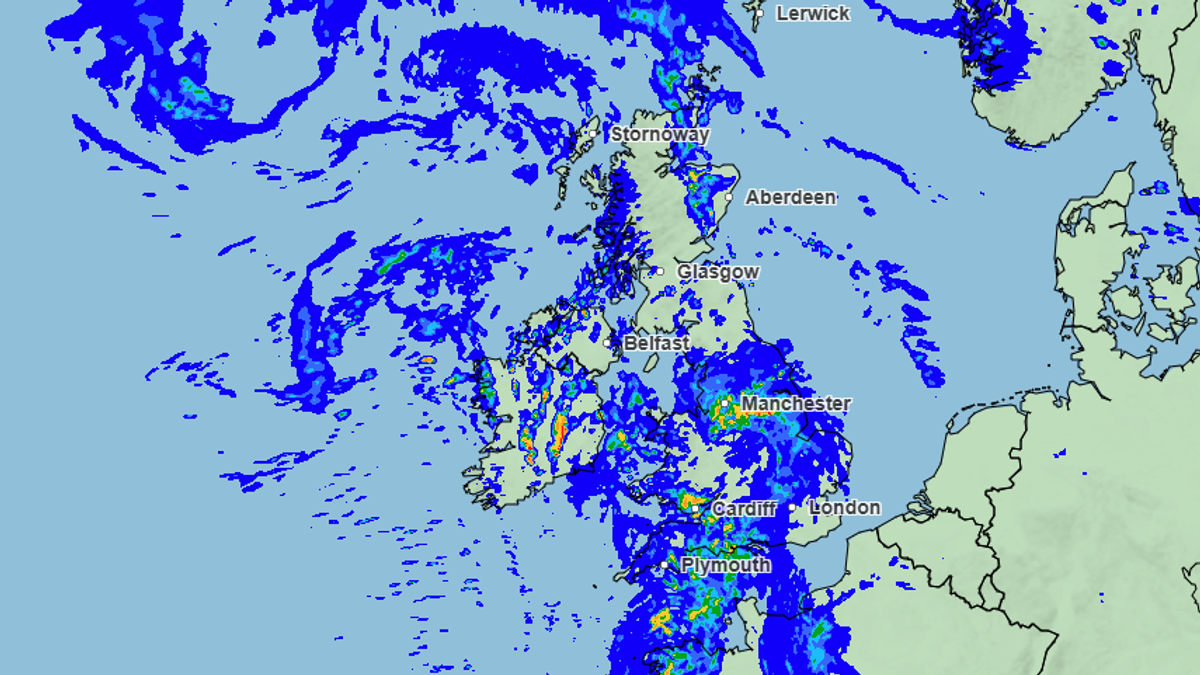
Britain is on the verge of bidding farewell to its unprecedented heatwave as heavy rainfall is predicted to sweep across the nation during a 21-hour period.
According to weather maps from the Met Office, extensive downpours are expected to cover a large part of the UK, affecting 23 counties at various times during the forecasted period.
Areas such as London, Kent, Cornwall, Greater Manchester, Yorkshire, and Scotland are among those likely to experience up to 8mm of rainfall starting at 1 pm on Monday, June 1, with some regions anticipating showers persisting until 10 am the following day.
This shift in weather conditions follows the recent setting of a new record for the hottest May day in the UK, with temperatures soaring to 35.1C at Kew Gardens in London.
Meteorologists are now anticipating a transition from the scorching heat to a more unsettled climate as rain bands and showers are projected to move in early next week.
The Met Office noted that the widespread heatwave would gradually diminish in intensity in the upcoming days, leading to cooler and more unsettled weather conditions for many regions. They also issued warnings of scattered showers and potential thunderstorms as the weather pattern undergoes changes.
Chief Forecaster Chris Bulmer remarked on the breakdown of the intense heatwave, mentioning that while parts of the southeast could still reach highs of 32C on Thursday, most areas would experience fresher conditions by the weekend due to a weak cold front advancing southeastward across the UK.
As temperatures begin to decrease, the weather is expected to become more variable, with the likelihood of showers and thunderstorms. By the weekend, temperatures are anticipated to return to near-average levels for this time of year, accompanied by rainfall through the weekend and into the start of the following week.
Looking ahead to Monday, the Met Office predicts further spells of rain or showers moving across the UK, interspersed with brighter intervals. They also anticipate temperatures to align more closely with the seasonal average compared to the recent heatwave period.

