

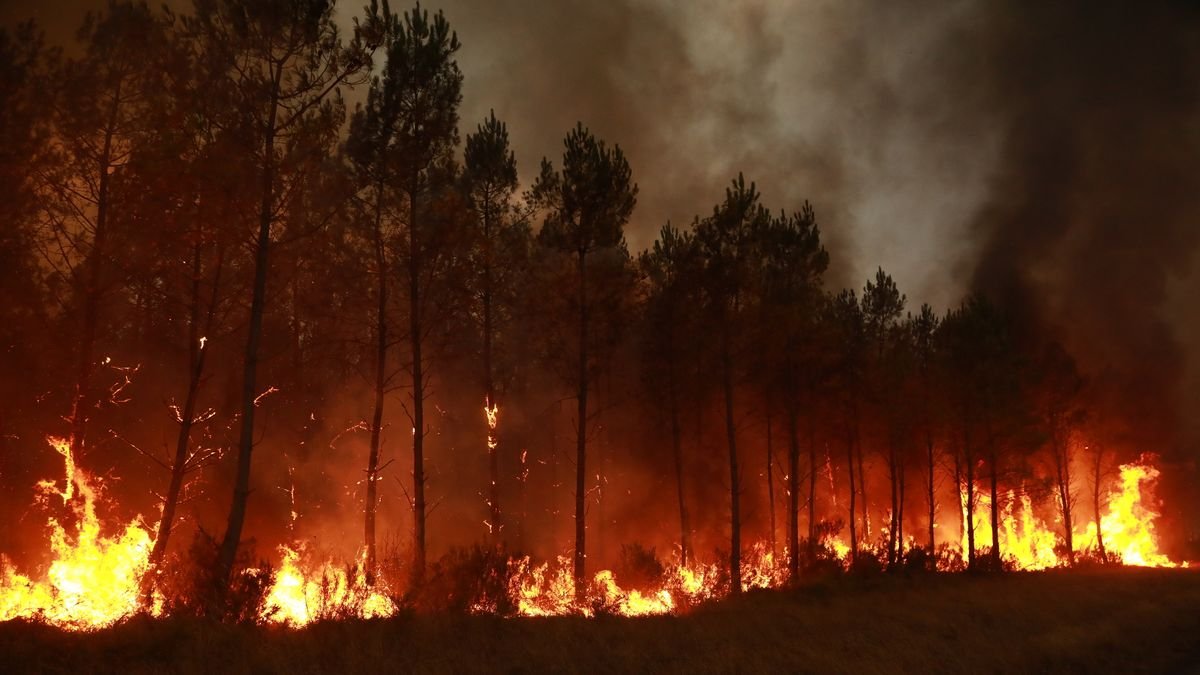
Firefighters worked urgently to contain wildfires amidst scorching temperatures today, with Bordeaux residents likening the situation to the historic disaster in Pompeii. Striking visuals from Lege-Cap-Ferret in southwestern France displayed the aftermath of burnt vehicles, bicycles, and structures. Locals drew parallels to Pompeii’s fate during Mount Vesuvius’ eruption in AD 79 as they evacuated, with the air thick with smoke.
The ongoing heatwave in the UK is set to bring temperatures of 39C, adding to the challenges. A Bordeaux resident, Chris de Abrea, expressed his concerns, stating the city felt reminiscent of Pompeii with smoky air making it hard to breathe and the pervasive smell of burning.
The wildfire has ravaged over 42,000 hectares of land, demolishing 240 residences, leading to the evacuation of more than 300,000 individuals in France and Spain. French President Emmanuel Macron addressed the severity of the situation, labeling it as the worst since World War II, emphasizing the unprecedented nature of the wildfires.
Macron highlighted the extraordinary efforts deployed, with over 1,500 military personnel aiding firefighting operations. He underscored the construction of firebreaks to impede the fire’s progress.
Residents in Bordeaux, while some resume normalcy, grapple with uncertainties about their future living arrangements and the fate of their homes. The intensity of the unfolding events near Bordeaux has left many in disbelief, with a looming sense of fear about the fire’s proximity.
Spain’s national weather service cautioned about extreme fire risks due to scorching temperatures and dry conditions nationwide, urging stringent wildfire containment measures. Maria Eugenia Olive, from the Official Association of Forest Technical Engineers, noted the escalating firefighting challenges amid the expected high temperatures in southern Europe.
One resident shared her evacuation ordeal from Saint-Médard-en-Jalles in southwestern France, expressing relief at the improved air quality in Bordeaux. The community rallied together, offering support to the evacuees, showcasing solidarity amid the crisis.
As the heatwave intensifies in parts of England, the UK Health Security Agency issued heat health alerts, warning vulnerable groups about potential health risks. The scorching temperatures are anticipated to peak in the southeast and east of England this week, with varying impacts across the country.
Forecasters predict temperatures ranging from 25-32C in England and Wales, with hotter conditions likely in the Midlands, southern, and eastern England. While some regions experience rainfall, the focus remains on central and southern England, with a possibility of heat spreading to other areas later in the week.

