
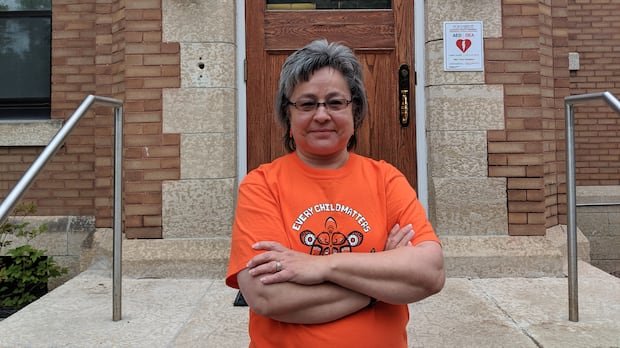
The individual who initiated Orange Shirt Day expressed profound dismay upon discovering the sale of orange shirts online bearing phrases like “Dig deeper” and “Still no proof.” Phyllis Webstad, speaking from Tk̓emlúps te Secwépemc in B.C., where potential unmarked graves were found near a former residential school site, described the use of her campaign in a “hateful way” as deeply troubling.
Webstad recounted her personal experience of wearing an orange shirt gifted by her grandmother on her first day at St. Joseph’s Mission residential school in Williams Lake, B.C., in 1976. The shirt was confiscated by school authorities and never returned. In commemoration of Indigenous children compelled to attend residential schools, Webstad established Orange Shirt Day on Sept. 30, 13 years ago.
A recent development saw Rebel News selling orange T-shirts online for the National Day for Truth and Reconciliation. The shirts feature statements like “Still no proof,” “You can’t handle the truth,” and “Canada was built not stolen.” Webstad criticized these sales as a direct affront to her efforts with the Orange Shirt Society, emphasizing the importance of respecting and understanding the truth of Indigenous experiences.
Ezra Levant, founder of Rebel News, defended the shirts in a statement, highlighting their commitment to freedom of expression and challenging mandated narratives associated with events like Orange Shirt Day. However, Webstad and other critics viewed the shirts as disrespectful and exploitative of the painful history of residential schools in Canada.
Webstad, drawing from her family’s experiences, emphasized the need for acknowledgment and respect for Indigenous voices and histories. The sale of the controversial shirts prompted condemnation from various officials, including Indigenous Caucus members and Ministers, who denounced the merchandise as disrespectful and exploitative of the suffering endured by residential school survivors.
The shirts, available in both youth and adult sizes, have sparked a broader conversation on the implications of denialism and the exploitation of Indigenous trauma for profit. Calls for legislative action to address residential school denialism as a form of hate speech have gained traction, with advocates pushing for legal measures to combat the spread of harmful narratives regarding Canada’s history with residential schools.

