

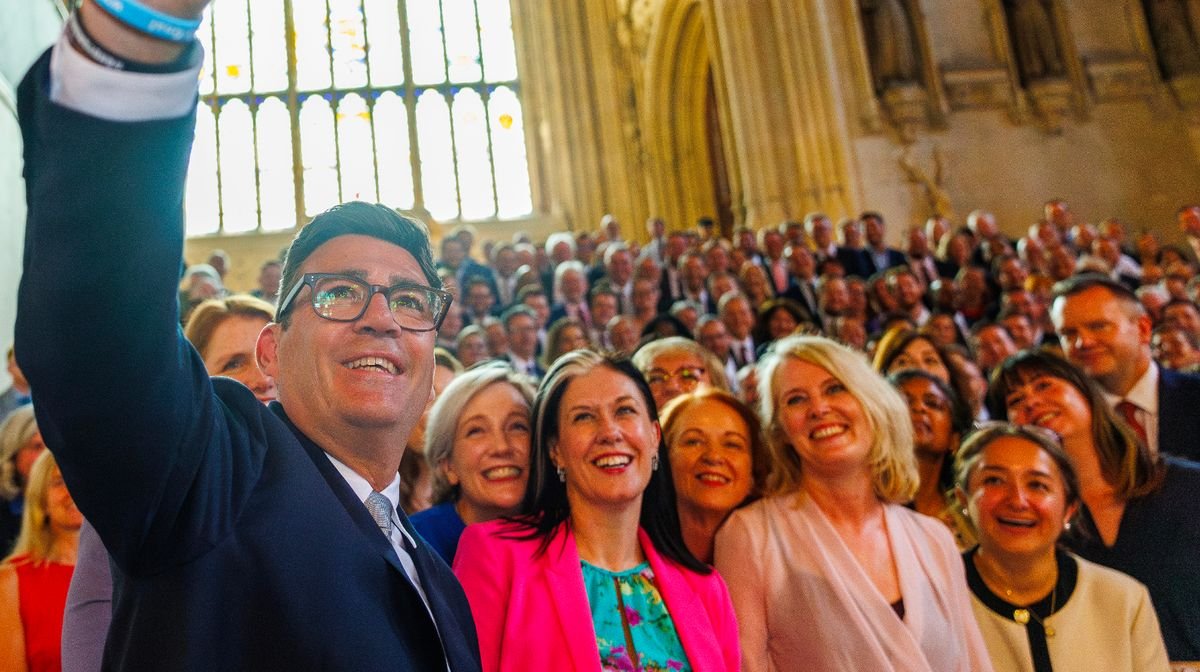
Andy Burnham has pledged to eliminate the practice of undermining female ministers if he becomes the Prime Minister. Addressing a gathering of the Labour Party’s women’s Parliamentary group, Burnham stated that he would dismiss any team member engaging in sexist attacks and emphasized the necessity for a change in the prevailing culture.
His stance comes in response to complaints from senior female Labour members regarding what they perceive as a consistent trend of negative media briefings targeting female ministers. Burnham also criticized a recent statement made by an unidentified party member to The Spectator, suggesting he would be “Labour’s first woman prime minister” due to his focus on issues like health, education, family finances, and public safety.
The comment sparked backlash from MPs and underscored internal tensions within Labour concerning the absence of a female leader, contrasting with the Conservatives who have had four female leaders, including three Prime Ministers.
During the meeting, Burnham emphasized the importance of changing the prevailing culture within the party, stating that any team member found engaging in negative briefings would be promptly dismissed. He also clarified that he has never claimed to be or will describe himself as the first female Labour Prime Minister.
In a similar vein, Keir Starmer has consistently condemned negative briefings against colleagues and appointed several women to key positions within his team. Notably, Rachel Reeves serves as the first female Chancellor, while other significant roles are held by Yvette Cooper as Foreign Secretary and Shabana Mahmood as Home Secretary.
Despite these efforts, complaints persist regarding attacks on senior female figures within the party. Culture Secretary Lisa Nandy and Education Secretary Bridget Phillipson have both spoken out about experiencing misogynistic briefings, with former Transport Secretary Louise Haigh also alleging a pattern of sexist leaks.
As pressure mounts on Burnham to appoint women to prominent roles within his potential Cabinet, Labour’s female MPs have urged him to ensure gender balance in his team and appoint a female deputy Prime Minister. They argue that the exclusion of women’s voices in decision-making processes weakens the government and have raised concerns about structural misogyny, bullying behavior, and inadequate engagement with the party and the Parliamentary Labour Party.
These calls for gender equality and a shift in party culture highlight the ongoing efforts within Labour to address gender-based discrimination and promote inclusivity within its ranks.

