

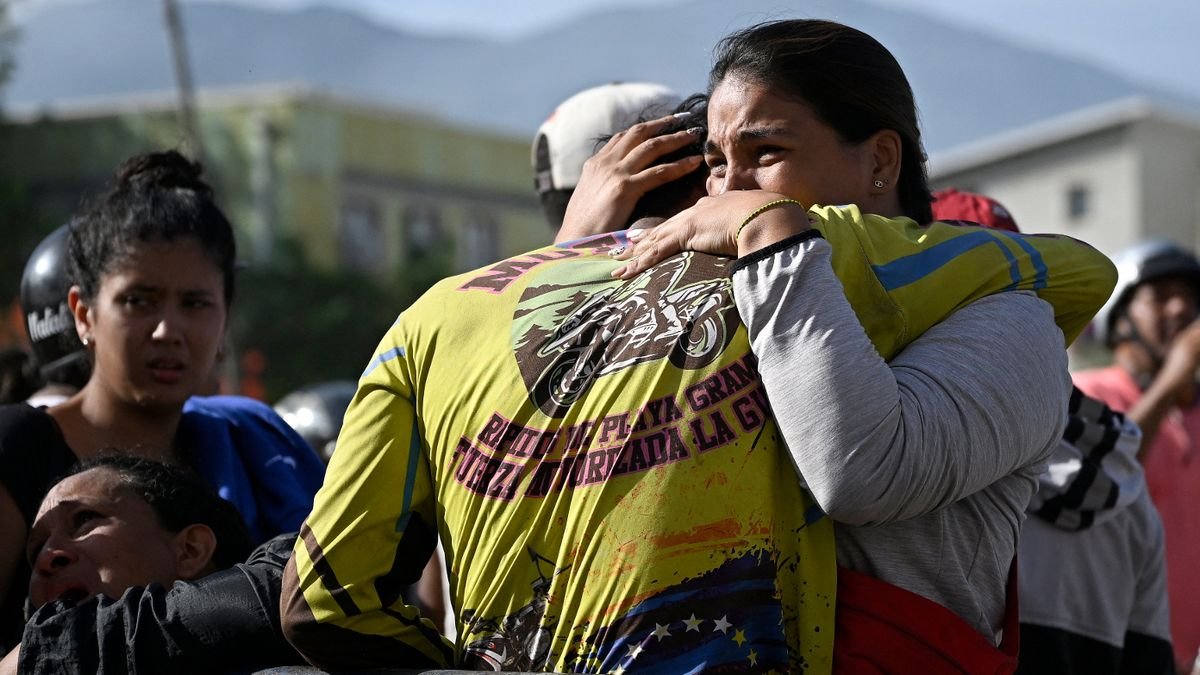
Desperate efforts are ongoing today following two seismic events in Venezuela that have resulted in a minimum of 188 casualties, with concerns that the death toll could rise significantly. The attempts to rescue individuals trapped in the aftermath of the disasters were initiated after the South American nation was struck by the calamities, causing injuries to approximately 1,500 individuals. An expert agency has estimated a 44% probability of fatalities exceeding 10,000 and a 30% chance of the number surpassing 100,000.
The earthquakes, measuring 7.2 and 7.5 magnitudes and occurring seconds apart, shook Venezuela on Wednesday evening local time. These were among the most powerful tremors to impact the country in more than a century, resulting in numerous people being unaccounted for. According to Jorge Rodriguez, President of Venezuela’s National Assembly, the seismic events claimed at least 188 lives and trapped over 200 individuals.
Rescue teams utilized power tools to navigate through debris where structures once stood. Simultaneously, distressed residents in the capital, Caracas, flooded the streets, scouring through rubble in search of missing persons among collapsed edifices and fallen electrical poles.
Interim President Delcy Rodriguez mentioned that rescue squads from various regions of the country were being redirected to La Guaira, located on the northern coast of Caracas. Officials were striving to maximize daylight hours to accelerate the rescue operations for those believed to be still trapped beneath the wreckage.
Television footage captured the rescue of three children, covered in dust but alive, from the debris in La Guaira state, described by Rodriguez as a “disaster area” and the most severely impacted zone. She stated, “Numerous structures have collapsed in that area … and intensive rescue missions are currently underway to save lives.”
In La Guaira, Cristian Carreno gazed in shock at his charred apartment building tilting precariously. He expressed his devastation, noting the loss of all his possessions and the likelihood of people still trapped inside. The scene was described as incredibly tragic.
Online videos showcased numerous individuals, some receiving treatment on the ground and others on hospital beds, outside a medical facility in La Guaira.
The initial estimates of potential casualties were provided by the US Geological Survey (USGS), indicating a likelihood of widespread devastation.
During the earthquakes, people fled from swaying structures, only to witness collapsed walls upon turning back, revealing interiors from the street. In one instance in La Guaira, a man clad in shorts descended the facade of a structurally compromised building while a crowd looked on.
Dayana Delgado, a mother of three, narrated her distress at the disappearance of her eight-year-old child, expressing her hope of finding him safe and unharmed.
In downtown Caracas, hundreds spent the night huddled in parks, parking lots, and open spaces. Authorities cautioned against returning to homes with structural damage.
Maria Cristina Diaz, a 41-year-old janitor, shared her fear of buildings collapsing on her group during the quake. She described the night’s events as harrowing, emphasizing the emotional turmoil they endured. Fortunately, they survived the ordeal.
Parts of the capital experienced power outages and disrupted mobile coverage, with the earthquakes causing damage to and closure of Simon Bolivar International Airport, as reported by Rodriguez. Subway services in Caracas were halted, and natural gas supplies were cut off, impacting the population. Many individuals, both in Venezuela and abroad, encountered difficulties in reaching family members. Fliers with photos of missing persons and handwritten lists of names were circulated as families sought information on their loved ones.
The USGS disclosed that the initial earthquake, measuring 7.2 in magnitude, struck west of Moron on the Caribbean coast, approximately 105 miles west of Caracas, with a depth of around 14 miles. A subsequent 7.5 magnitude tremor occurred, with a depth of about six miles and an epicenter 10 miles southwest of Moron.
US Secretary of State Marco Rubio announced the immediate dispatch of search and rescue teams, medical aid, and humanitarian support to Venezuela from the United States, ensuring a comprehensive and prompt response.
Rodriguez, assuming the role of acting president following the capture of her predecessor, Nicolas Maduro, during a US military operation, extended gratitude to US President Donald Trump.
Head of the UN’s humanitarian agency, Tom Fletcher, assured families awaiting news of their loved ones under the rubble that efforts were underway to provide assistance. Save the Children’s country director in Venezuela, Fatima Andraca, emphasized the urgent need for support in shelter, food, water, and healthcare for children in the affected areas.
In December, the UK government estimated the presence of approximately 500 British nationals in Venezuela, primarily as dual citizens or long-term residents. Foreign Secretary Yvette Cooper conveyed solidarity with those impacted by the tragic earthquakes, pledging assistance in collaboration with partners to address the situation and support the global response. British nationals were advised

