

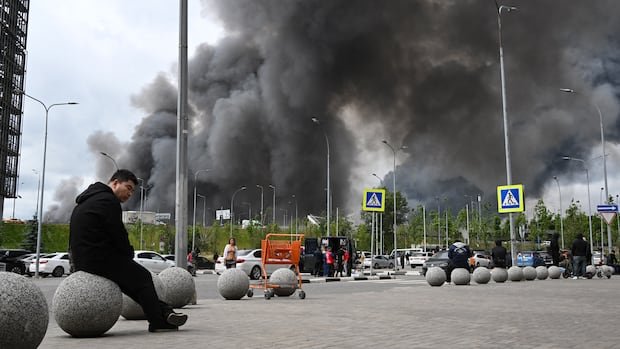
Last week, black smoke hovered above Moscow as Ukrainian drones flew over the city. This marked Ukraine’s most significant drone attack on the Russian capital since the full-scale invasion by Russia in 2022. The attacks caused numerous flight disruptions and cancellations, with a major oil refinery on the city’s outskirts being repeatedly targeted and set on fire.
Ukrainian President Volodymyr Zelenskyy stated, “If Ukraine is going to burn, your Moscow will burn too,” emphasizing the retaliatory nature of the strikes. The recent wave of attacks has brought the war closer to the daily lives of many Russians, creating disruptions and undermining their sense of security.
Analysts suggest that these attacks could heighten internal tensions as the conflict continues. However, the impact of this discontent on Russian President Vladimir Putin’s hold on power remains uncertain.
Historian Anne Applebaum highlighted the significance of the recent drone strikes on Moscow, indicating a potential shift in the attitudes of influential figures who have sway over Putin. Applebaum emphasized that the attacks may not immediately end the conflict but could contribute to altering the mindset of the business and political elite.
Despite the visible impact of the strikes on the city, footage of the attacks was not aired on Russian evening newscasts, and no warnings were issued to residents. This lack of information and preparedness has led to anxiety among Moscow residents, as reported by independent media outlets.
In response to the dissemination of images depicting Ukrainian attacks, some Kremlin allies have condemned Russians sharing such content. Russian propagandist Vladimir Solovyov labeled those sharing videos of the attacks as traitors, criticizing their actions on his radio show.
Moscow, along with other Russian cities, has been targeted in recent Ukrainian strikes. The attacks on an electronics plant in Voronezh and power disruptions in Crimea and southern Russia have amplified feelings of fear and uncertainty among affected communities.
As public support for the war declines, some Russian nationalist figures have criticized Putin’s handling of the conflict. Exiled opposition activist Mikhail Khodorkovsky highlighted the potential implications of decreasing support for the war on Putin’s position of power, emphasizing the role of oligarchs in Russia’s political landscape.
The possibility of widespread protests poses a challenge for Putin, who may resort to force to maintain control. The escalating domestic discontent and prolonged war present complex challenges for Putin, with potential risks of increased desperation and aggression from the Russian leadership.
Putin’s status as a wanted figure by the International Criminal Court for alleged war crimes adds to the mounting pressure he faces. While not displaying clear signs of victory in the war, Putin’s response to growing challenges remains uncertain, with possibilities of heightened aggression as a result of mounting pressure.

