

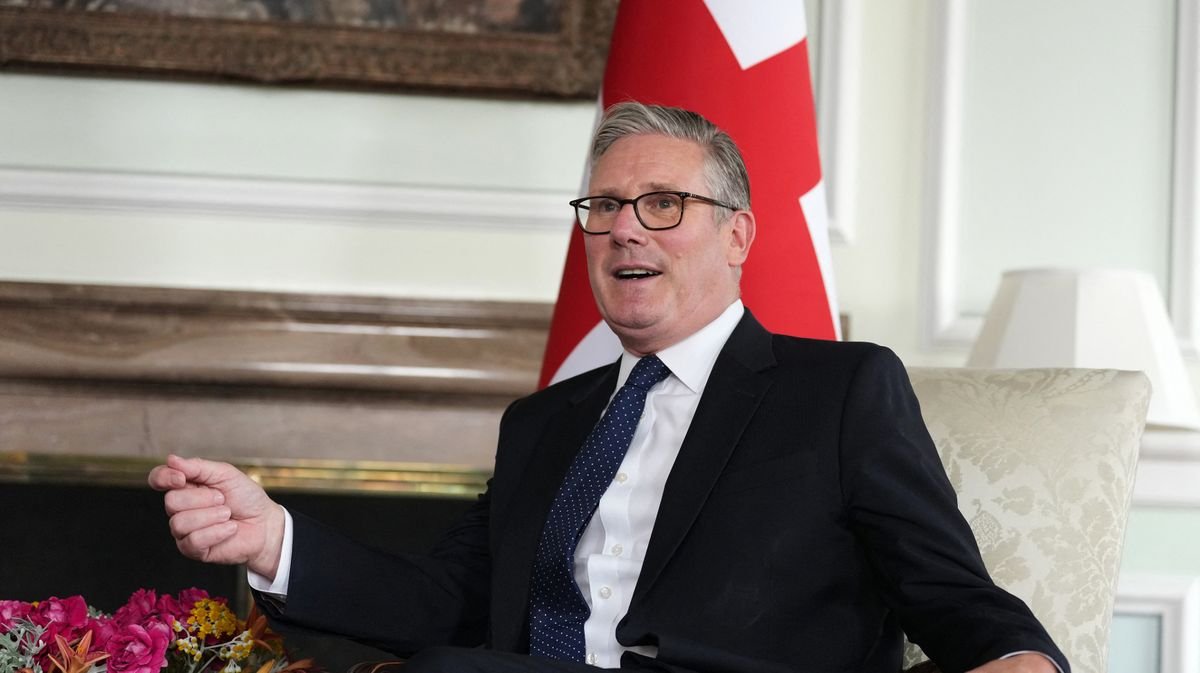
The United Kingdom is set to lead a £37 billion initiative to enhance the development of long-range missiles capable of striking deep into enemy territories, responding to the escalating threat posed by Russia. This move, announced at a Nato summit in Turkey, will see UK Prime Minister Keir Starmer unveiling plans, in collaboration with twelve allies, to increase funding for precision weapons with a range of up to 2,000km for precise targeting.
During the summit, Mr. Starmer will engage in discussions on Ukraine, defense, and broader security matters, marking his final appearance as Prime Minister before handing over leadership to Andy Burnham on July 20. In the face of pressure from former US President Donald Trump, European leaders are intensifying efforts to bolster their military capabilities to address concerns of over-reliance on American defense resources.
As the US reassesses its global military commitments, concerns have emerged regarding its ability to fulfill promised weapon deliveries to Nato countries amid escalating tensions, particularly due to ongoing conflicts such as the war in Iran. In response, the UK is joining strategic partnerships with the US and Australia to participate in the Precision Strike Missile program, equipping its armed forces with advanced ballistic missile technology for increased defense capabilities.
Furthermore, collaborative efforts with Germany, France, and Italy are underway to accelerate the development of stealth, hypersonic, and maritime strike missiles, reinforcing European defense capabilities for the future. The UK government emphasizes the importance of strengthening NATO and enhancing security measures to safeguard against evolving threats, particularly from Russia.
Acknowledging the evolving security landscape, Defense Secretary Dan Jarvis highlighted the significant investment of £298 billion in defense over the next four years to bolster readiness and equip UK forces with cutting-edge technology. The UK’s commitment to deep precision strike capabilities aims to ensure military readiness and deter potential adversaries, aligning with NATO’s collective security objectives.
At the summit, UK officials will underscore the growing Russian threat, citing a surge in military activities around UK waters and an increase in interceptions of Russian aircraft near UK airspace. Foreign Secretary Yvette Cooper emphasized the strategic importance of precision strike capabilities in deterring aggression and enhancing mutual security among NATO allies.
In a demonstration of solidarity with the US, the UK will appoint Lt Gen Nick Perry as the Commander of Joint Force Command Norfolk in 2026, the first British officer to hold the position. This appointment underscores the UK’s commitment to NATO operations in the Atlantic, UK, High North, and northern Europe, showcasing a united front in addressing security challenges and reinforcing transatlantic defense cooperation.

