

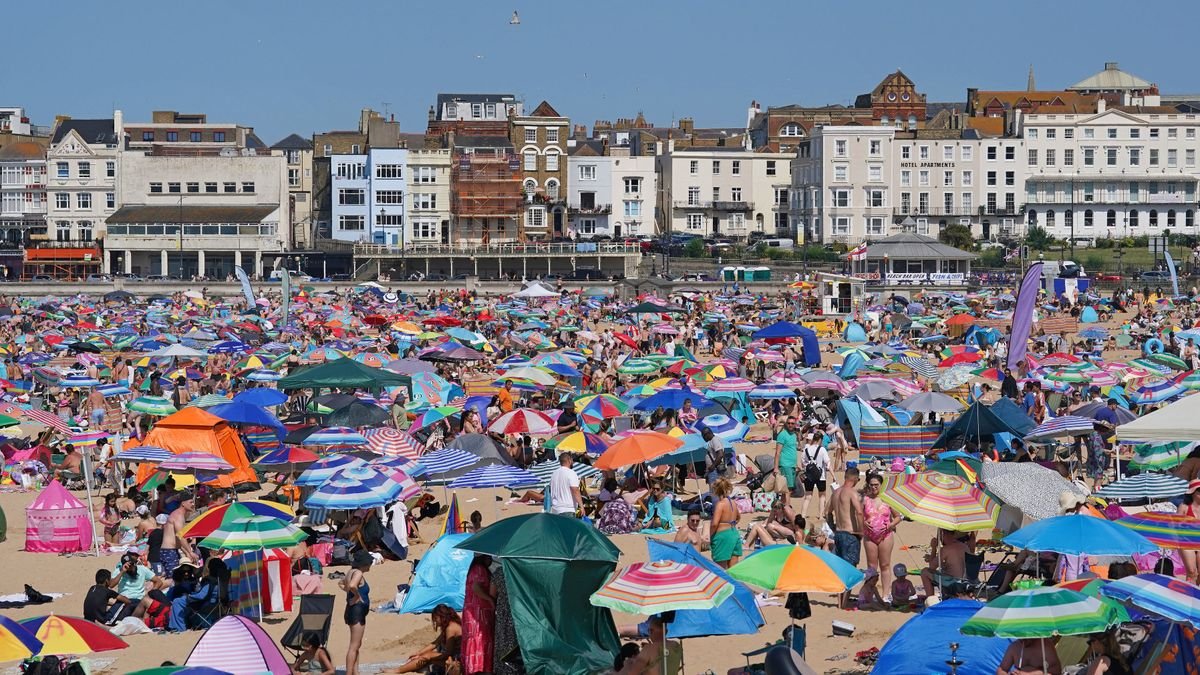
Temperatures are expected to rise to 25C next weekend, with the Met Office indicating a higher likelihood of heatwave conditions over the next three months.
While the UK prepares for unsettled weather patterns, including rain and showers sweeping across the country in the coming days, conditions are anticipated to improve by the weekend.
Met Office forecaster Craig Snell mentioned the potential for a slight temperature increase over the weekend, with projections of around 24C in London on Saturday and reaching into the low to mid-20s in the South East.
Before the warm spell, rain is forecasted to move southeastward on Sunday evening, intensifying in parts of the north and west with gusty winds. Showers will then follow in Scotland and Northern Ireland, leading to cooler conditions in those regions.
On Monday, a band of rain is set to persist across southern and eastern England, becoming heavy at times. Other areas can expect a mix of sunny intervals and scattered showers, although it will feel relatively cool for this time of year.
Tuesday and Wednesday will likely remain cool and blustery with a combination of sunshine and heavy showers, followed by the potential return of widespread rain on Thursday.
Mr. Snell suggested that after a variable week with possible cold periods, even temperatures reaching 24C or 25C could feel significantly warmer.
The Met Office projects maximum temperatures ranging from 17C to 18C in southern areas and 15C to 16C in the north during the working week. By the weekend, temperatures are predicted to climb into the low 20s in the south, with the possibility of 24C or 25C in the South East, while the north should see highs in the upper teens.
The warmer weather outlook coincides with the Met Office’s three-month summer forecast for June to August, indicating an elevated chance of hot conditions and potential heatwaves. England and Wales recently experienced their warmest spring on record, with the UK registering its highest May temperature ever at 35.1C in London’s Kew Gardens.
A climate attribution study released last summer by Met Office scientists revealed that the likelihood of surpassing temperature records, such as the hottest May temperature, has significantly increased due to the impact of the climate crisis.
The study highlighted that breaking previous temperature records is now around three times more probable in today’s climate compared to a natural climate unaffected by greenhouse gas emissions. Events once considered extremely rare are now estimated to occur approximately every 33 years.

