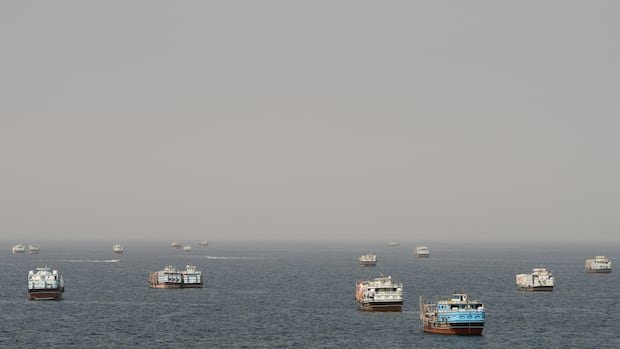
Seven oil tankers were either set ablaze or suffered damage in the Strait of Hormuz overnight due to attacks by Iran or encounters with naval mines, Tehran announced on Thursday. This incident, occurring amid escalating tensions, raised concerns about a potential return to full-scale conflict.
Iranian state television relayed the claims of the recent ship attacks, citing the Islamic Revolutionary Guard Corps navy, which also issued threats against U.S. military bases in the region if the U.S. continues to assist in navigating commercial vessels through the strait. While casualties were not mentioned in the report, Iran asserted dominance over the waterway shortly after the U.S. and Israel initiated widespread strikes within Iran on February 28.
According to the United Kingdom Maritime Trade Operations, October witnessed the highest number of reported attacks on commercial shipping since the beginning of the conflict in March. Although UKMTO did not confirm the latest incidents, it highlighted a growing reluctance among some shippers to report such occurrences.
Experts suggest that despite challenges, oil producers have managed to sustain the flow of crude, albeit at a rising cost. Concerns are mounting as Israel approaches a crucial election and the U.S. midterm elections draw near, with fears that U.S.-Israeli military actions against Iran could reignite, fueled by dissatisfaction over high fuel prices linked to the conflict.
With the possibility of a Netanyahu victory in the upcoming Israeli election, there are predictions of a likely attack on Iran, as indicated by Danny Citrinowicz, a researcher at Israel’s Institute for National Security Studies and a former Iran specialist in Israel’s military and intelligence services.
A full-scale resumption of hostilities could jeopardize civilians across the region and disrupt global oil, natural gas, and fertilizer deliveries. American maritime restrictions and trade sanctions have significantly curtailed Iran’s oil export revenues, exacerbating its economic challenges. Despite attempts to conceal energy shipments off the coast of Oman, Iran’s energy exports remain severely reduced.
In response to the escalating tensions, the United States is deploying additional military assets to the region, including a third aircraft carrier and thousands of troops, augmenting the significant American naval presence in the Middle East.
The conflict dynamics have expanded with intensified clashes between Iran-backed Houthi rebels in Yemen and Saudi Arabia. The Saudi-led coalition reported intercepting drones over Riyadh and Medina, underscoring the escalating threats.
The Houthis claimed responsibility for attacks on various Saudi locations, including the Defence Ministry in Riyadh, Aramco facilities in Yanbu, and King Fahd International Airport in Dammam, resulting in casualties. These repeated assaults by the Houthis on Saudi soil have strained the country and led to increased U.S. military support.
In response to the security situation, the U.S. State Department has instructed the departure of some diplomats and their families from missions in Saudi Arabia and other regional posts due to Houthi attacks on civilian targets within the country.
Efforts to mediate between the conflicting parties are ongoing, aiming to facilitate formal discussions between Washington and Tehran. Iranian Foreign Affairs Minister Abbas Araghchi expressed Tehran’s readiness for diplomacy while emphasizing its commitment to self-defense.
Iran has put forth a proposal outlining conditions for ending the conflict and reopening the strait promptly if the U.S. fulfills specified requirements. These conditions mirror those agreed upon in a previously failed deal signed in June, signaling Iran’s stance on resolving the conflict diplomatically.