
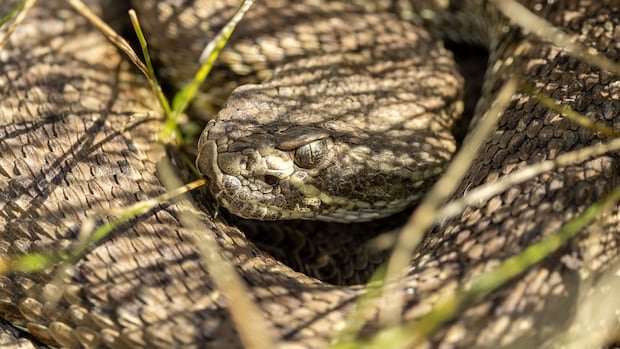
Lethbridge’s snake relocation expert has had a bustling year. Ryan First Diver attends to 70% of the inquiries received through the City of Lethbridge’s snake hotline, which residents can contact if they spot a snake on public premises. The city’s ongoing program relocates snakes from public areas to their natural habitats, including den sites, wintering spots, or birthing grounds.
This year, a total of 211 snakes have been relocated, encompassing rattlesnakes and other species like bullsnakes, which are non-venomous constrictors often mistaken for rattlers. Describing it as an “all-time record,” First Diver shared this information with CBC News.
City official Dave Henley mentioned that Lethbridge typically receives around 150 to 160 snake-related calls annually. First Diver noted an increased community awareness of snakes, attributing it to his social media posts that led to a surge in inquiries initially. However, the volume later stabilized as residents became more knowledgeable about snake sightings and reporting procedures.
Residents are now actively spreading awareness about snake encounters and precautionary measures online. Those in Lethbridge worried about snakes can contact the city’s hotline at 403-332-6806.
Addressing misconceptions about rattlesnakes, First Diver emphasized that these creatures are not aggressive and seldom pose a threat if treated with caution. Despite their venomous nature, rattlesnakes tend to strike only when cornered or threatened, not out of aggression towards humans.
Stefano Liccioli, a biologist specializing in at-risk species, clarified that while rattlesnakes are venomous, no fatalities have occurred in Alberta due to snakebites. He advised individuals to remain calm and vigilant if they encounter a rattlesnake to avoid provoking an attack.
The increased reports of snake sightings in Lethbridge may indicate a rise in snake populations or heightened community awareness, according to Liccioli. Efforts are underway to study and monitor Alberta’s prairie rattlesnake population, with some snakes tagged for tracking movements and den locations.
Liccioli anticipates obtaining comprehensive data on snake population trends in Alberta within the next decade. This data will guide conservation efforts and determine the need for additional protective measures in the future.

