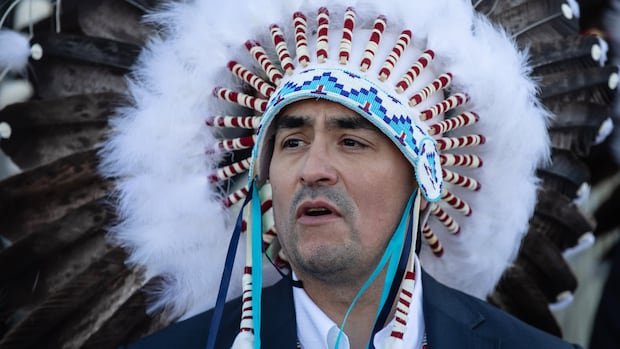
The leader of Siksika Nation in southern Alberta is demanding a formal explanation following a shortage of ballots during the recent referendum vote. Chief Samuel Crowfoot, speaking on CBC Radio’s Alberta Morning, commended the high voter turnout but raised concerns about the impact of ballot shortages on people’s ability to participate in the voting process. Crowfoot emphasized the importance of having confidence in the democratic process alongside the issues being debated.
Due to the scarcity of ballots, at least one polling station in Siksika Nation experienced delays of up to two and a half hours. Crowfoot announced plans to request an official explanation regarding the distribution of ballots and Elections Alberta staffing. He aims to compare the resources allocated to First Nation communities with those provided to other municipalities to determine if similar ballot shortages occurred elsewhere.
Kevin Duncan, a spokesperson for Elections Alberta, confirmed that Siksika Nation was the only community to officially run out of ballots, although other First Nations communities also faced shortages. He mentioned that additional ballot deliveries were made throughout the day to various First Nations, including Whitefish Lake First Nation, Kainai Nation (Blood Tribe), Samson Cree Nation, Louis Bull Tribe, and Ermineskin Cree Nation.
Acknowledging the delays at polling stations in Siksika Nation, Duncan stated that the stations remained open later than planned to accommodate voters. He highlighted the collaborative efforts between Elections Alberta and First Nation communities to ensure sufficient ballots were provided and polling stations remained open for an appropriate duration.
Despite the unexpected voter turnout, Elections Alberta had prepared by estimating the required number of ballots for each polling station based on historical data and adding a buffer of 150%. Duncan described the situation as a positive outcome, noting that multiple ballot deliveries were made to several First Nations due to the high voter turnout.
In another community, voters at the Samson Cree Nation polling station in Maskwacis were turned away due to ballot shortages, causing frustration among eager voters. Additional ballots were dispatched throughout the day, but shortages persisted, leading to some voters being denied the opportunity to cast their votes.
Desmond Bull, chief of the Louis Bull Tribe in Maskwacis, expressed a mixture of satisfaction and concern over the ballot shortages, emphasizing the significance of voter engagement in the democratic process. Similarly, Elliot Fox, a Blood Tribe councillor, reported that the Levern Community Hall polling station faced ballot shortages, prompting an extension of voting hours to accommodate voters.
Elections Alberta stated that despite the delays experienced at some polling stations, such issues were typical during election events, attributing them to factors like internet connectivity and staffing shortages. The agency acknowledged the need for continued consultation with First Nation communities to address voting barriers and ensure a smoother voting process in future events.