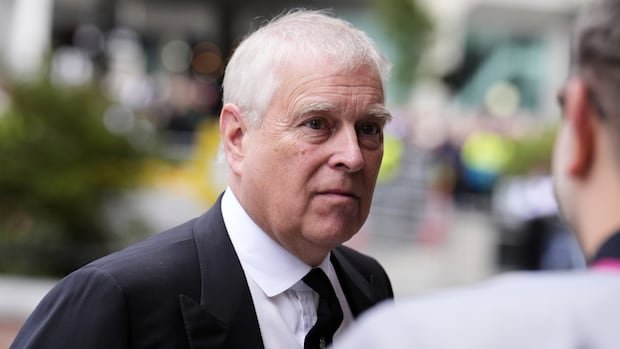
British authorities announced on Thursday that search warrants obtained to investigate properties associated with Andrew Mountbatten-Windsor were deemed unlawful and are to be invalidated. However, the inquiry into King Charles’s brother remains active. Andrew, aged 66, was taken into custody in February on suspicion of misconduct in public office in connection to his association with the late U.S. sex offender Jeffrey Epstein, leading to searches at residences in Sandringham and Windsor. His arrest, a rare event for a senior royal and eighth in line to the throne, captured global attention, notably with a widely circulated Reuters photo showing the somber former prince leaving the police station.
The investigation by the police, focusing on Andrew’s tenure as a British special representative for trade from 2001 to 2011, is anticipated to be prolonged and intricate. Following his arrest, Andrew, who has maintained silence publicly, initiated a legal challenge seeking to annul the search warrants. Thames Valley Police acknowledged the flaws in the warrant issuance process under the specific legislation and expressed the need to rectify these legally. The handling of seized materials and their relevance to the ongoing inquiry are subjects of ongoing legal proceedings.
During a High Court session in London, Judge Nicholas Hilliard highlighted that the police are striving to retain the confiscated items, a move contested by Andrew, with a final decision expected in the upcoming year. Thames Valley Police clarified that only materials unrelated to their investigation have been returned to Andrew. Despite the setback of warrant annulment, the investigation continues, spurred by the disclosure of extensive documents by the U.S. Department of Justice concerning Epstein.
Andrew, the second son of the late Queen Elizabeth, has consistently refuted any allegations of misconduct in relation to Epstein, expressing regret over their association. The offence of misconduct in public office, carrying a maximum sentence of life imprisonment, encompasses a range of serious transgressions, including breaches of trust, corruption, and sexual impropriety. Andrew’s introduction to Epstein is believed to have occurred through British socialite Ghislaine Maxwell, with scrutiny intensifying in 2011 following revelations by Virginia Roberts Giuffre, who accused Andrew of sexual assault when she was 17. Although Andrew denied the claims, a financial settlement was reached in a U.S. civil suit in 2022.
In 2019, Andrew withdrew from all official royal duties due to his ties with Epstein, following a widely criticized interview with BBC News. King Charles subsequently revoked Andrew’s titles and privileges, prompting his relocation from the grand Royal Lodge in Windsor to a smaller, privately funded residence in Norfolk. Epstein’s demise in 2019 was determined to be a suicide, while Maxwell was convicted of federal sex trafficking offenses in New York and sentenced to 20 years in prison in 2022. Tragically, Roberts Giuffre passed away at her Australian home last year in an incident ruled as suicide.
The U.S. congressional committee has been engaging with various prominent figures, including former President Bill Clinton, who had previous dealings with Epstein or Maxwell. While some committee members expressed interest in interviewing Andrew, they lack the legal authority to compel his appearance.