

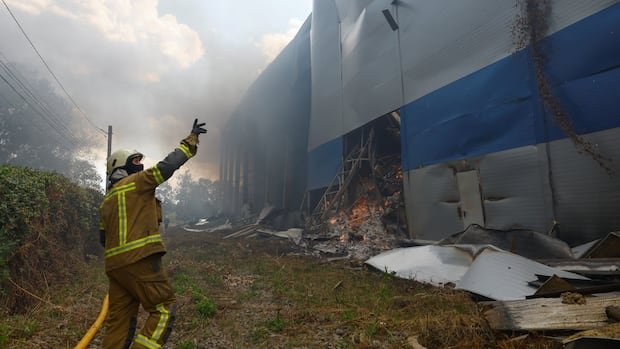
A recent drone strike by Russian forces targeted the main office of Ukraine’s SBU security service in central Kyiv, as confirmed by President Volodymyr Zelenskyy. The attack specifically aimed at the office of the head of the Security Service in the building, resulting in five injuries, according to Kyiv’s mayor.
This development marks a shift in Russia’s tactics in the ongoing conflict with Ukraine. Previously, Russian attacks were predominantly carried out at night, but there is now an increasing frequency of daytime strikes utilizing fast-flying, jet-powered drones. The continuous air-raid sirens in Kyiv have become a daily occurrence, causing exhaustion and anxiety among residents who are struggling to cope with the relentless disruptions.
Residents like Volodymyr Bovsunovskyi are finding even simple tasks like shopping challenging, with the fear of sudden alerts disrupting daily routines. The constant threat has prompted some residents, including Bovsunovskyi, to consider leaving the city temporarily to seek respite from the ongoing turmoil.
Ivan Datsiv, an IT worker, experienced the destruction caused by a Russian drone that penetrated his apartment, emphasizing the escalating danger faced by civilians. The frequency of alerts has led to a sense of futility in seeking shelter repeatedly, with some residents contemplating relocating to safer areas to avoid the constant threat of attacks.
The impact of these attacks extends beyond physical damage, with recent strikes destroying millions of Ukrainian books, leading to concerns about the cultural losses suffered as a result. As the conflict intensifies, the Ukrainian population is grappling with the challenges posed by the changing dynamics of the conflict and the need for sustainable solutions to ensure the safety and well-being of civilians.

