
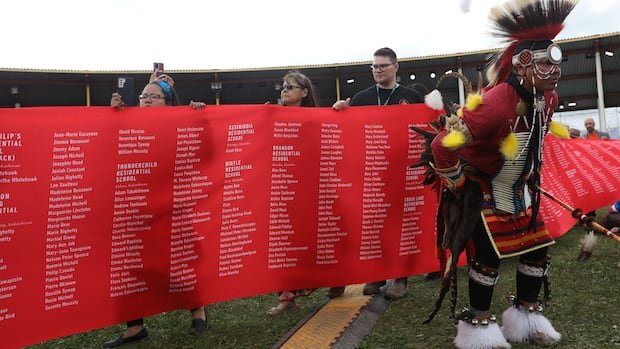
The National Centre for Truth and Reconciliation (NCTR) introduced a student memorial register in 2019, listing the names of children who passed away in residential schools. Initially, the register contained 2,800 names, including an entry that caught attention – “Indian girl 237.” After extensive research into historical documents and records from residential schools and White Bear First Nation in Saskatchewan, it was revealed that her name was Letitia John.
Former White Bear First Nation chief Annette Lonechild emphasized the importance of acknowledging history to move forward and bring closure to individuals like Letitia. The NCTR’s head of archives, Raymond Frogner, highlighted the dynamic nature of the memorial register and the continuous effort to ensure accuracy by revising the list of deceased children associated with residential schools.
Letitia John, born around 1897, was taken to Qu’Appelle Industrial School in 1903, where she tragically succumbed to tuberculosis in 1912. The prevalence of tuberculosis in residential schools, as noted in the Truth and Reconciliation Commission’s report, was attributed to poor living conditions and inadequate ventilation.
Further research by the NCTR revealed Letitia’s family ties to White Bear through treaty annuity records. Despite challenges in tracing historical connections, efforts are ongoing to honor and remember individuals like Letitia who suffered in residential schools. Lorena Fontaine, Indigenous Academic Lead at the University of Manitoba, highlighted the systemic erasure of children’s identities in these institutions, leading to lasting confusion and pain for families.
Letitia’s identity was shared with the White Bear community in 2021, emphasizing the importance of never forgetting those who endured the legacy of residential schools. Chief Lonechild expressed faith in the community’s remembrance of Letitia and her belief that the memory of individuals like her endures through oral histories, despite gaps in official records.

